Ostuni
Puglia’s White city
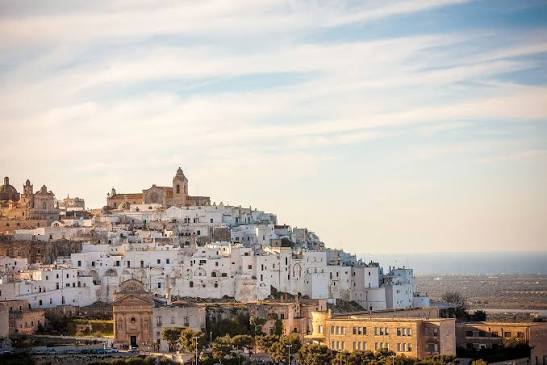
From a distance, Ostuni looks like a mirage. A cascade of whitewashed houses tumbles down a hilltop in the Valle d’Itria, glowing against the deep blue Adriatic sky — so bright on a summer afternoon it almost hurts to look at. They call it La Città Bianca, the White City, and it’s the most photographed town in Puglia.
But here’s the thing most guides don’t tell you: Ostuni isn’t white for the tourists. It’s white because of the plague.
Why Ostuni Is White: Lime Wash and the Plague
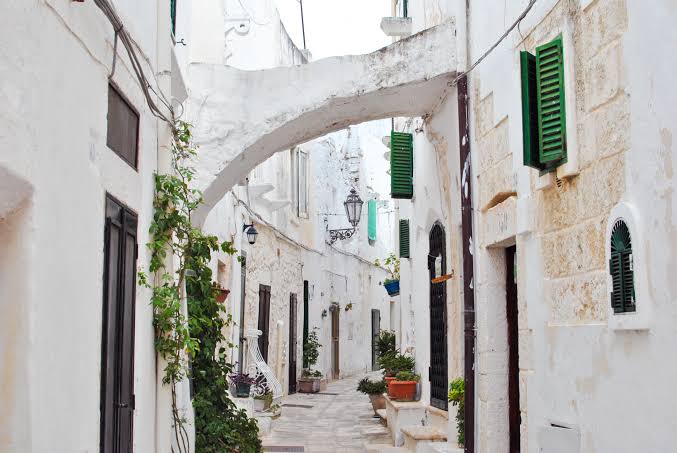
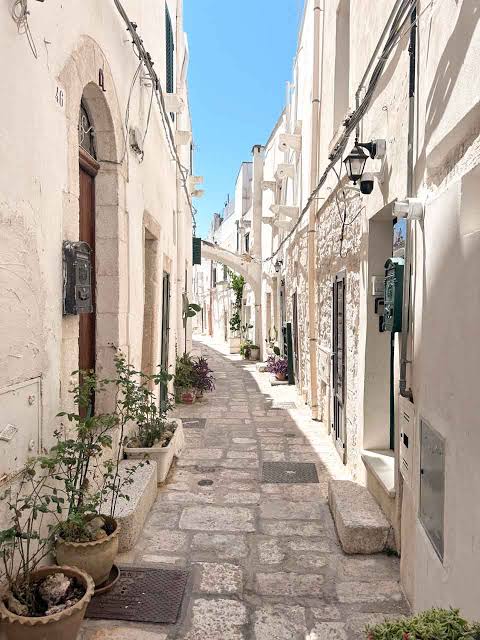
In the 17th century, plague swept through southern Italy. The people of Ostuni had a weapon: lime. They whitewashed every wall in the old town with calce — slaked lime — because lime is a natural disinfectant. The practice stuck. To this day, the historic center gets a fresh coat of whitewash regularly, and walking those gleaming lanes, you’re walking through a 400-year-old public health measure that accidentally created one of Italy’s most beautiful towns.
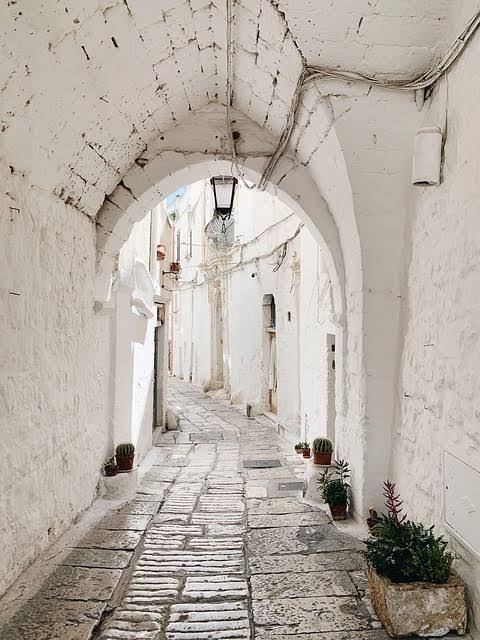
The old town itself is a medieval labyrinth — narrow, winding, deliberately confusing. It was designed that way. Invaders who breached the walls would get lost in the maze of blind alleys and dead ends while locals, who knew every shortcut, picked them off from the rooftops. Getting lost here is the point. Put the map away.
What to See in Ostuni’s Old Town
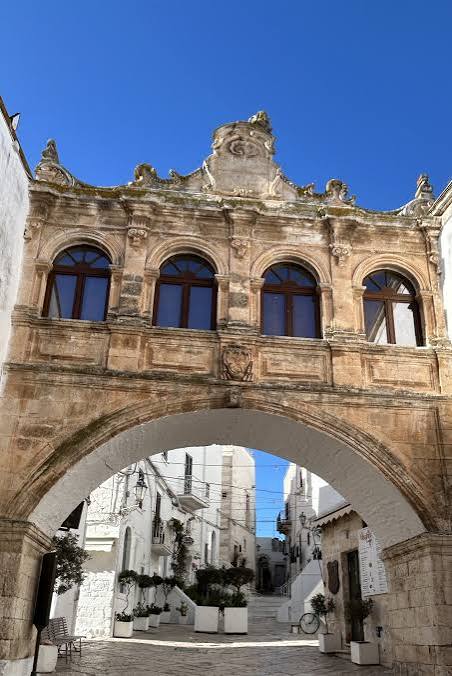
The climb starts at Piazza della Libertà, the elegant square at the foot of the old town, with its Column of Sant’Oronzo — an 18th-century baroque column topped by the town’s protector saint, built from a Roman column salvaged from the Via Appia.
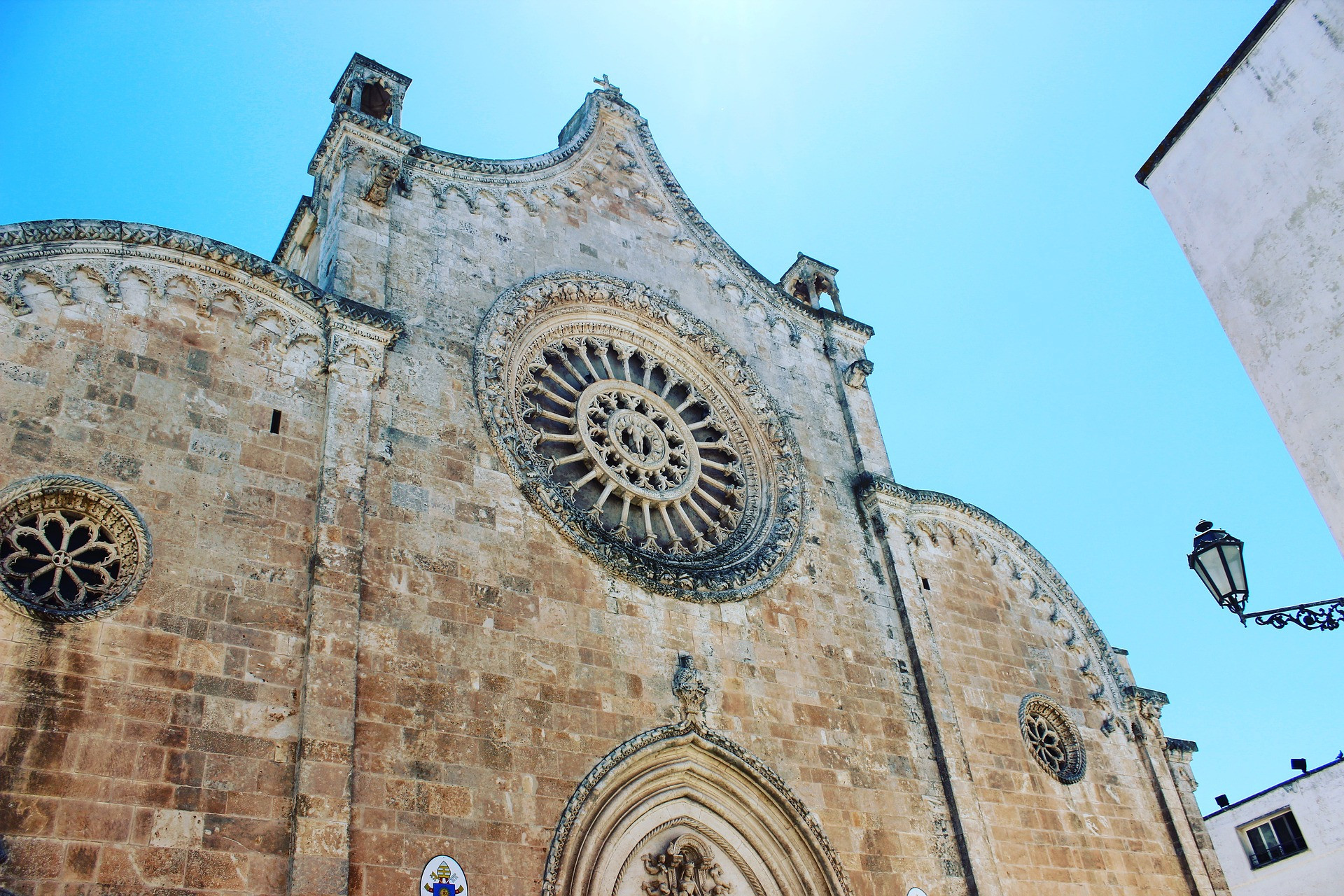
From there, you climb. The lanes narrow, the stairs multiply, and the white walls press in. Keep going up to the Cathedral of Santa Maria Assunta, a 15th-century Gothic-Romanesque church with one of Puglia’s most beautiful rose windows — a 24-ray stone sunburst that catches the late afternoon light. Inside, it’s cool and dim, a relief from the white glare outside.
Wander. That’s the real itinerary. The old town rewards aimless walking: sudden piazzas with sea views, artisan workshops in vaulted stone rooms, laundry strung between whitewashed walls, cats asleep on warm steps. Every turn is a photograph.
Practical Tips for Visiting Ostuni
– Go early or late. Midday in summer, the white walls reflect brutal heat and light. Morning (before 11) and golden hour are magical — and your photos will thank you.
– Wear real shoes. This is a hill town of steep stairs and uneven stone. Those cute sandals will betray you.
– Park below and walk up. The old town is a ZTL (limited traffic zone). There are parking lots at the base; the climb is the experience.
– It’s 16.5°C in the Grotte di Castellana year-round, but Ostuni in August is the opposite — bring water, a hat, and plan a long lunch in the shade.
– Stay for dinner. Ostuni after dark, when the day-trippers leave and the lanes glow under warm lamps, is a different town — quieter, more romantic, entirely yours.
Where to Eat: The Valle d’Itria on a Plate
Ostuni sits in some of Puglia’s richest farmland, and the food shows it. Look for orecchiette made by hand, fave e cicoria, and the local extra-virgin olive oil — the plain below Ostuni is carpeted with ancient olive groves, some trees a thousand years old.
Don’t leave without trying the local primitivo or a crisp white from the Valle d’Itria. And if you’re here in autumn, ask about the new olive oil — olio nuovo, peppery and green, poured over warm bread.
Beyond the White City: What Else to Do Nearby
Ostuni makes a good base for the northern Valle d’Itria:
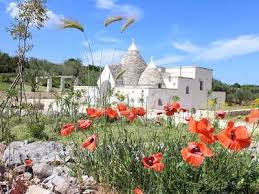
Alberobello (30 minutes): the trulli capital. Pair it with Ostuni in a single day — white city in the morning, trulli in the afternoon.
Locorotondo (20 minutes): a round hill town famous for its white wine and circular old town.
Cisternino (25 minutes): come hungry — the fornelli grill butchers’ shops cook your meat to order.
Martina Franca (25 minutes): baroque elegance and the Festival della Valle d’Itria opera festival each summer.
– The coast (15 minutes): Costa Merlata and the beaches south of Ostuni — rocky coves and clear water, far less crowded than the Salento beaches in August.
Why Ostuni Belongs on Your Puglia List
Puglia has baroque Lecce, cliffside Polignano, the trulli of Alberobello — but Ostuni is the one that stops you cold from a kilometer away. It’s the postcard, yes, but it’s also a real town with a strange history, great food, and lanes that were designed to get you lost.
Come for the white walls. Stay because you can’t find your way out.
FAQs Ostuni
Why is Ostuni called the White City?
Ostuni’s old town is whitewashed with lime (calce), a practice dating to the 17th century when lime wash was used as a disinfectant during plague outbreaks. The tradition stuck — the historic center is still regularly re-whitewashed, giving Ostuni its iconic gleaming appearance.
How many days do you need in Ostuni?
One full day covers the old town, cathedral, and a long lunch. Two days lets you add the coast (Costa Merlata beaches, 15 minutes away) or a Valle d’Itria day trip to Locorotondo, Cisternino, or Alberobello. Ostuni also works well as a base for 3–4 days exploring the northern Valle d’Itria.
Is Ostuni worth visiting?
Yes — it’s the most photographed town in Puglia for a reason. Beyond the whitewashed beauty, Ostuni has a genuine medieval old town, excellent Valle d’Itria food and wine, and a clifftop position with sea views. Go early morning or golden hour to avoid crowds and harsh midday light.
What’s the best time to visit Ostuni?
April–June and September–October are ideal: warm weather, fewer crowds, and the white walls glow without the brutal August heat. July–August brings peak crowds and intense reflected sunlight off the whitewash. Winter is quiet — many restaurants reduce hours, but you’ll have the lanes to yourself.
Can you do Ostuni and Alberobello in one day?
Yes — they’re about 30 minutes apart. Do Ostuni in the morning (the light is best before 11), have lunch, then head to Alberobello for the afternoon trulli. It’s a full day but very doable with a car.
Where do you park in Ostuni?
The old town is a ZTL (limited traffic zone) — you can’t drive in. Park in the lots at the base of the hill (near Piazza della Libertà) and walk up. The climb through the whitewashed lanes is part of the experience.