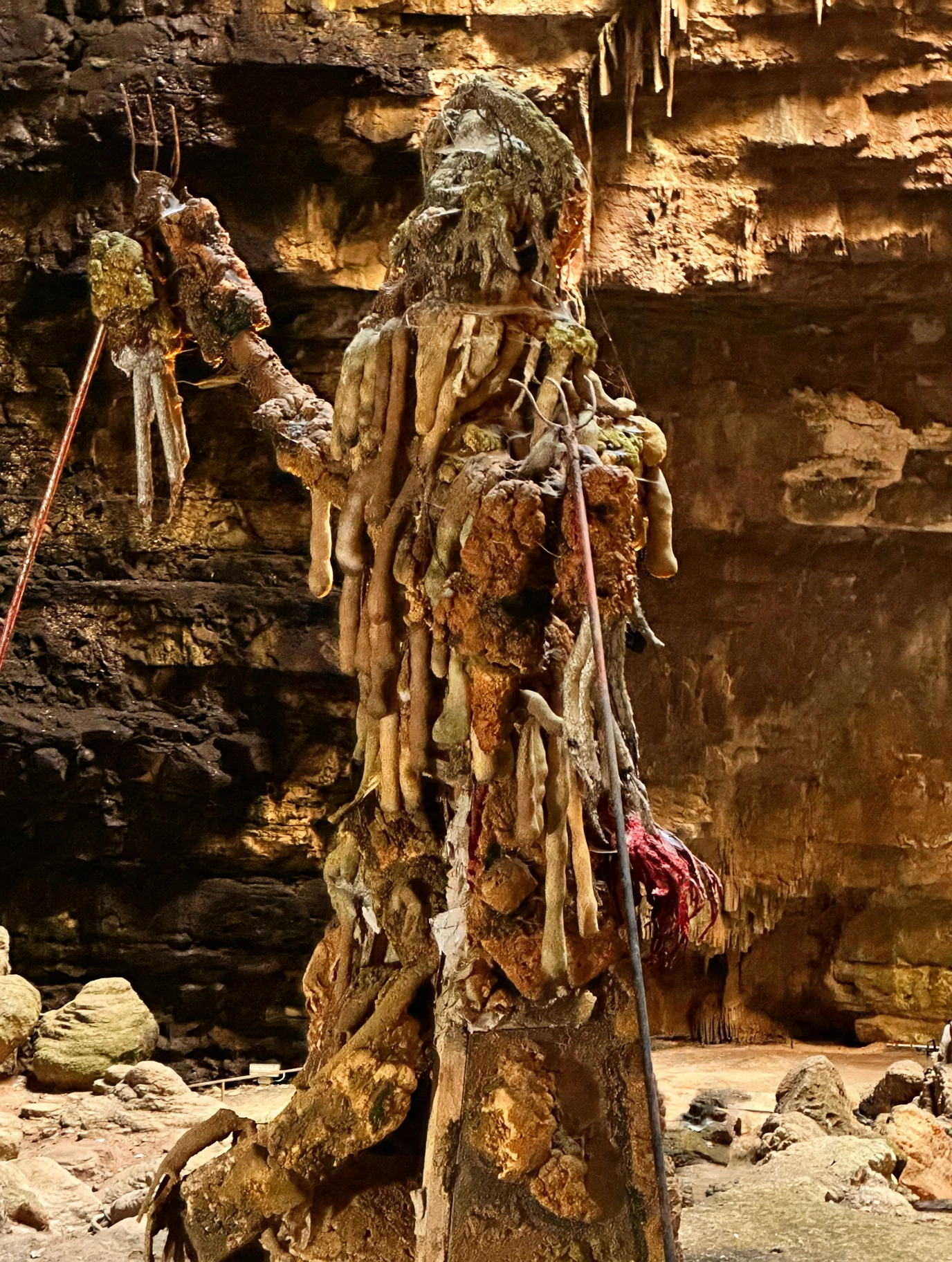
Experience Grotte di Castellana- From the Mouth of Hell
There’s a moment, about seventy meters underground, when your guide switches off the lamps and the darkness is so complete you can hear your own heartbeat. Then the lights come back up on the Grotta Bianca — a cavern draped in white alabaster so pure it looks carved from moonlight — and the whole group gasps. Every single time.
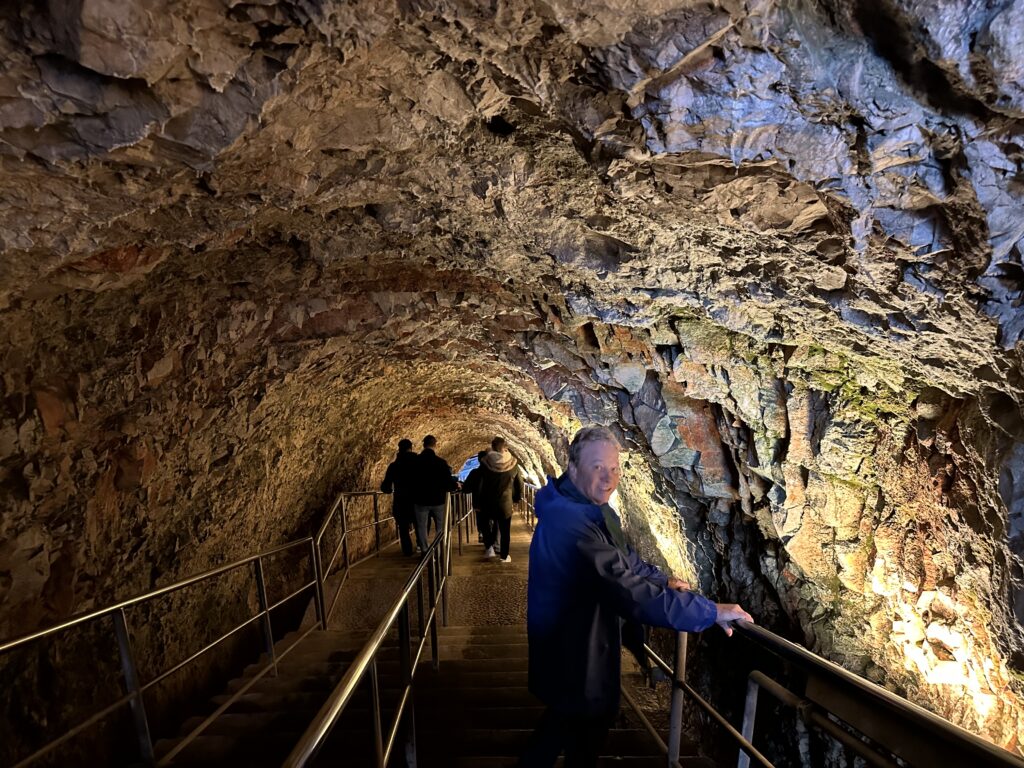
The Grotte di Castellana are the most spectacular caves in Puglia, and honestly among the most beautiful in Italy. Over 15 million people have walked these passages since they opened to the public. Here’s everything you need to know: the history, what the visit is really like, why it’s Puglia’s best rainy-day plan, and what else to do in the area.
A Very Short History: From the Mouth of Hell to 1938
For centuries, locals knew about the Grave — a massive sinkhole in the limestone outside Castellana, with a shaft of daylight falling into blackness below. Legend said it was the mouth of hell, and nobody was in a hurry to find out.
People thought the vapors from the hole were damned souls. For centuries, mist rising from the Grave at dusk — mixed with bats darting out — was believed to be the souls of suicides trying and failing to rise to heaven. Nobody went near it after dark.
The truth is older and stranger. The caves formed in limestone laid down 90 to 100 million years ago, when Puglia lay under an ancient sea. Rainwater spent millions of years dissolving the rock from the inside out, carving a system that runs 3,348 meters long and 122 meters deep.
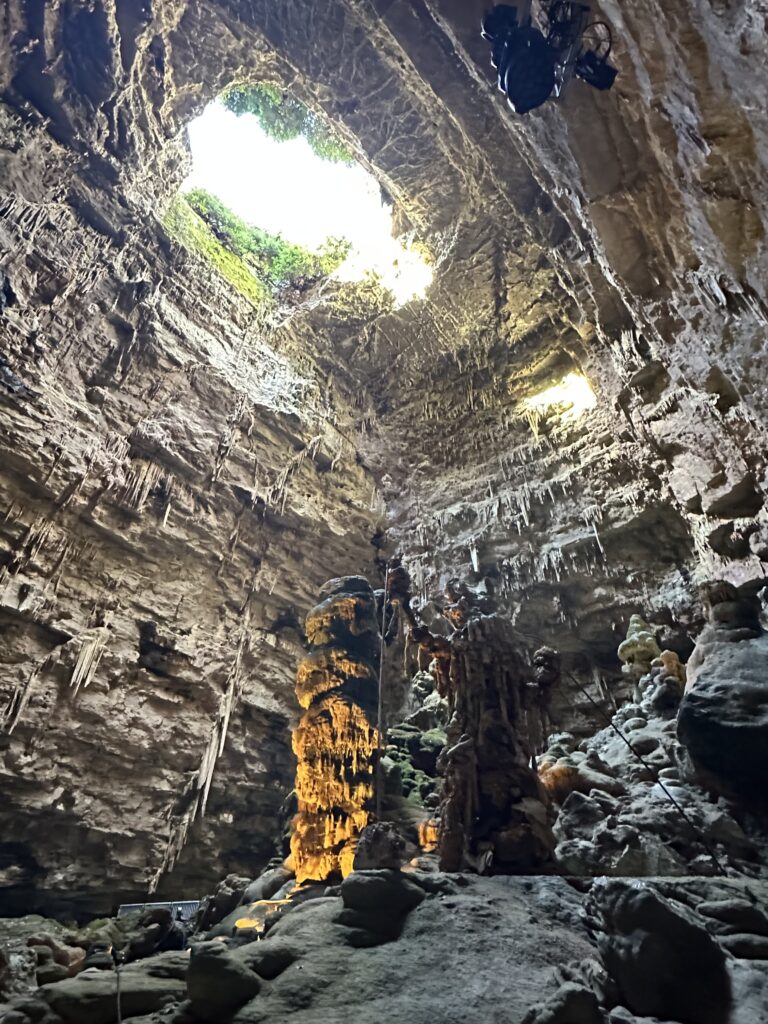
The human story starts on January 23, 1938, when the speleologist, Franco Anelli was lowered into the Grave on a rope. Edging along one wall, he found a narrow passage that opened, after a few dozen meters, into a cavern so enormous his acetylene lamp couldn’t reach the walls or ceiling. He’d found the Cavern of Monuments — and over the following years, Anelli mapped the entire system. The piazza at the cave entrance is named for him today.
What the Visit Is Actually Like
Every visit is guided (in Italian and English), along a paved, well-lit path — no crawling, no helmets, no experience needed. There are two routes:
– The full itinerary: about 3 km, roughly 100 minutes, ending at the Grotta Bianca.
– The short itinerary: about 1 km, around 50 minutes, for anyone short on time or looking for an easier trek.
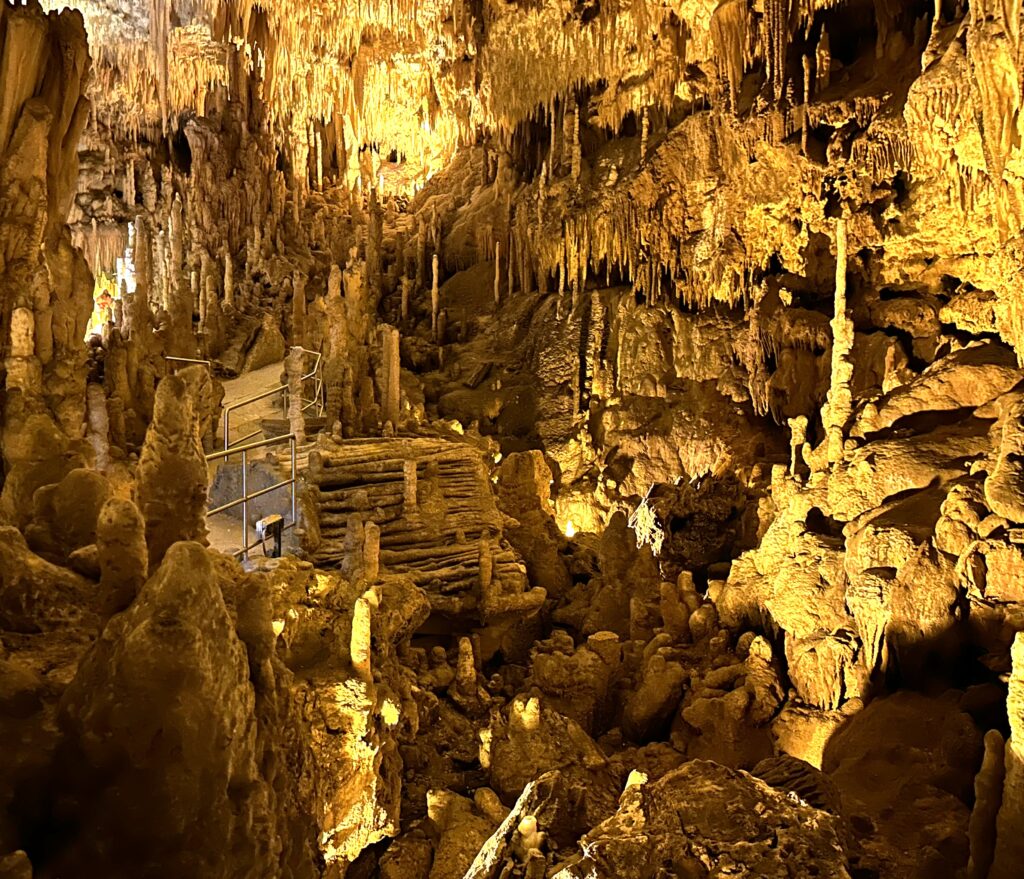
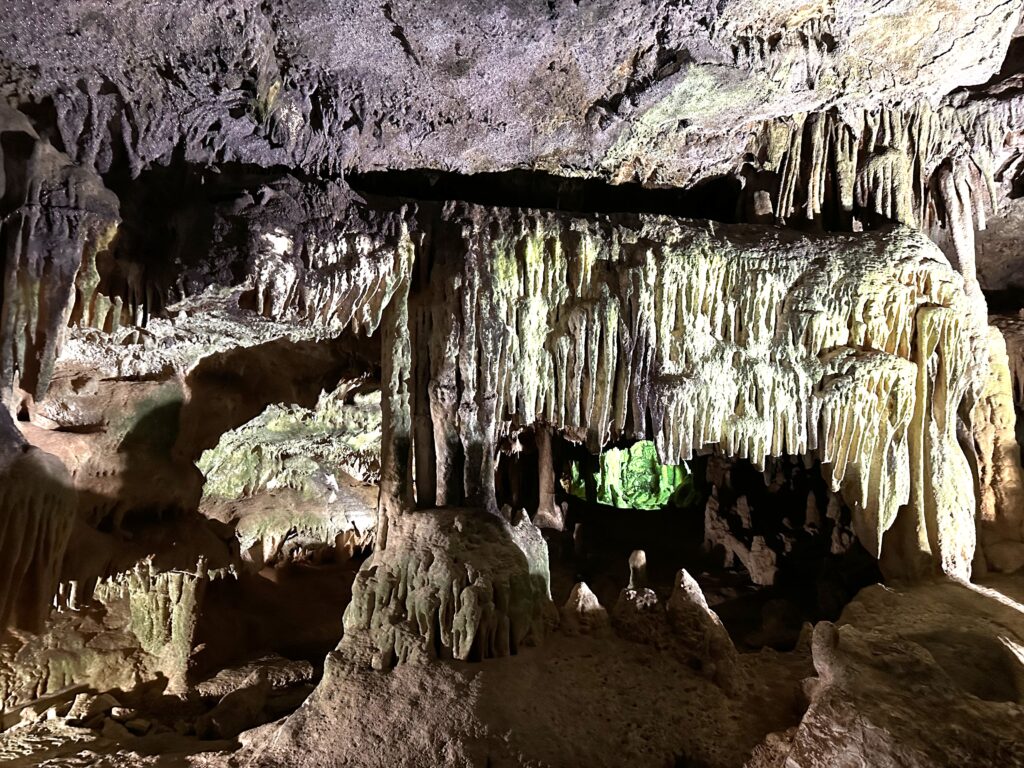
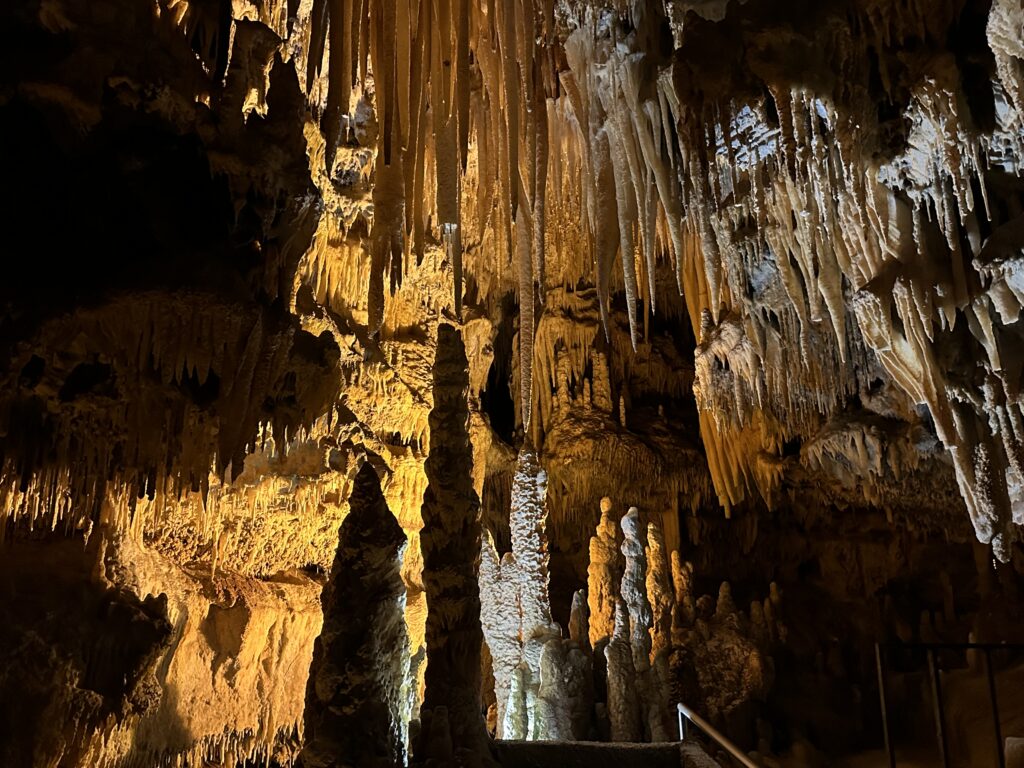
The tour opens with the descent into La Grave itself — the great cavern Anelli dropped into, still open to the sky above. From there the names get wonderfully fanciful: the Cavern of Monuments, the Owl, the Nativity Scene, the Altar. The finale is the Grotta Bianca, the “White Cave,” walled in translucent alabaster crystals. It’s the single most beautiful underground room I’ve seen in Italy.
Practical tips from someone who’s been
– It’s 16.5°C (about 62°F) down there year-round, with damp air. Bring a light jacket even in August — you’ll be grateful.
– Wear shoes with grip. The path is paved but wet in places, and there are stairs.
– Book tickets online in advance in summer — tours sell out. Expect around €18–20 for the full tour. Check grottedicastellana.it for current prices and times.
– Flash photography is restricted to protect the formations, and phone use is limited on some tours.
– There’s a small speleology museum at the entrance, worth 20 minutes while you wait for your tour slot.
Puglia’s Best Rainy-Day Excursion
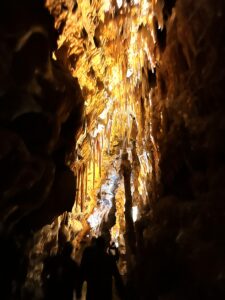
Here’s the thing nobody tells you: Puglia in November through March can be gloriously sunny — or it can rain sideways for three days. Most of the region’s great sights are outdoors, which leaves visitors staring out of a masseria window wondering what to do.
The caves are the answer. They’re entirely underground, entirely weatherproof, and the experience is identical in a thunderstorm or a heatwave. In summer, the 16.5°C interior is also the best air conditioning in Puglia — a genuine refuge when it’s 38°C outside and the beaches are packed. It’s one of the rare Puglia attractions with true year-round appeal, and kids love it: the guides lean into the fantasy names, and the “mouth of hell” legend does the rest.
Other Things to Do Nearby
The caves sit at the edge of the Valle d’Itria, so you’re surrounded by day-trip options:
– Alberobello (15 minutes): the trulli capital. Pair it with the caves in a single day — caves in the morning, trulli in the afternoon.
– Polignano a Mare (25 minutes): cliff diving, sea caves by boat, and dinner over the water.
– Monopoli (25 minutes): a prettier, calmer old town than Polignano, with a working fishing port.
– Conversano: a handsome medieval town with a Norman castle and a lovely historic center — 20 minutes away.
– Putignano (15 minutes): home to one of Italy’s oldest carnivals (February).
– In Castellana Grotte itself: the old town is worth a wander, and the Sanctuary of Maria Santissima della Vetrana holds the town’s beloved Madonna.
Festivals at the Caves
Two are worth planning around:
Festa della Madonna della Vetrana (January 11–12): the town’s patron saint festival, one of the most heartfelt in Puglia. In 1690–91, plague struck Castellana; on the night of January 11–12, 1691, two priests anointed the sick with oil from the lamp burning before the Madonna’s 14th-century image — and the plague lifted. The town has celebrated every January since, with processions and fireworks.
Hell in the Cave (summer into September): the legend comes full circle. This is Puglia’s largest underground aerial show — dancers, actors, and musicians performing Dante’s Inferno inside the Grave itself, 75 minutes, genuinely spectacular. It sells out; book through TicketOne when dates are announced.
Actual music concerts too. The caves are a listed concert venue — Francesco De Gregori played a piano-and-voice set there in December 2024, and shows go back years on setlist.fm. The acoustics in that stone are supposed to be unreal.
Speleonight tours run in summer — the caves by lamplight, a completely different atmosphere.
Getting There
The caves are at Piazza Franco Anelli, about 1.5 km outside Castellana Grotte, in the Metropolitan City of Bari — roughly 45 minutes from Bari, 40 minutes from Alberobello, and about an hour and a half from Lecce or Galatina. There’s a large parking area at the entrance.
By train, Castellana Grotte is on the Bari–Putignano–Martina Franca line, then a short taxi to the caves.
If the sky turns grey on your Puglia trip, don’t sulk — go underground. The caves have been waiting 90 million years. They can handle a little rain.
Secrets of Castellana Grotte
Castellana Grotte FAQs
Can you visit the Grotte di Castellana with a stroller or in a wheelchair?
Not easily. The tour route includes stairs and uneven paved sections, so strollers can’t go — use a baby carrier instead. The descent into La Grave is via a long staircase (the ascent is by elevator). Visitors with limited mobility should contact the caves in advance at grottedicastellana.it to discuss what’s feasible; the site is not fully wheelchair accessible.
How far in advance should I book tickets?
In July and August, book online several days ahead — tours regularly sell out, especially the English-language slots. From October through April you can usually buy at the ticket office on arrival, but booking ahead still guarantees your preferred time. Always check grottedicastellana.it for the current schedule, since tour times change seasonally.
Which tour should I choose — the full or the short itinerary?
First-timers should take the full itinerary: it’s the only route that reaches the Grotta Bianca, the white-alabaster cavern that’s the highlight of the entire system. Choose the short itinerary if you’re traveling with very small children, have limited time, or just want a taste — it covers La Grave and the first section of caves in about 50 minutes. Both tours are guided and start from the same entrance.
Is there anywhere to eat at the caves?
Yes — there’s a bar/cafeteria at the entrance complex, plus the town of Castellana Grotte (1.5 km away) has proper restaurants and pasticcerie. Many visitors pair a morning cave tour with lunch in town or in nearby Alberobello. If you’re visiting with kids, there’s space outside the entrance for a picnic.
Can I take photos inside the caves?
Photography without flash is generally allowed, but flash is strictly forbidden — it damages the formations and disturbs the cave environment. Tripods and selfie sticks aren’t permitted, and guides may ask you to keep phones away in the most delicate sections. Your best shots will be in La Grave, where natural daylight streams in from the skylight above.
What’s the best time of day and year to visit?
Go for the first tour of the morning to beat the crowds and the tour buses. For the quietest experience, visit between October and March — you’ll practically have the caves to yourself. Summer visitors get a bonus: the constant 16.5°C interior is the best escape from Puglia’s heat, and summer evenings bring the Hell in the Cave performances.
Great cities nearby