The Magnificent Monte Sant’Angelo
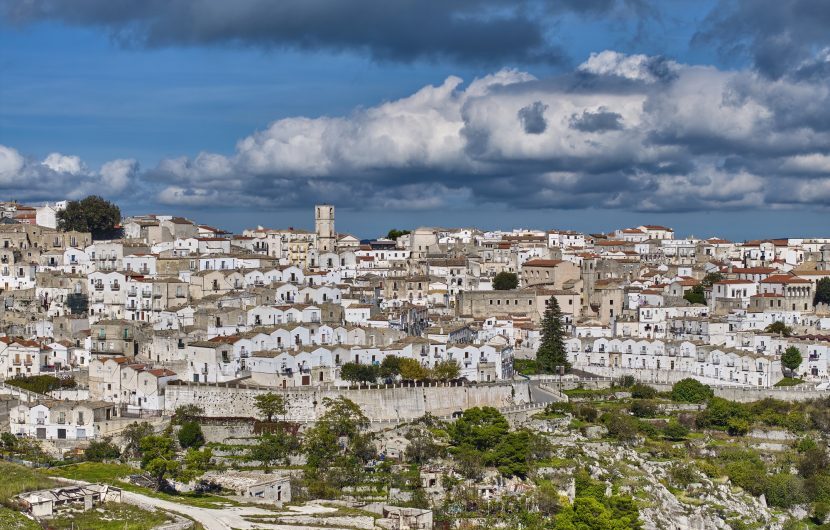
Monte Sant’Angelo sits high on the Gargano — about 800 meters above the sea, the highest town on the promontory — and it guards one of the most extraordinary churches in the Christian world. Not the prettiest. Not the biggest. The strangest claim of all: it is the only church on earth consecrated not by a pope, a bishop, or any human hands at all, but by the Archangel Michael himself.
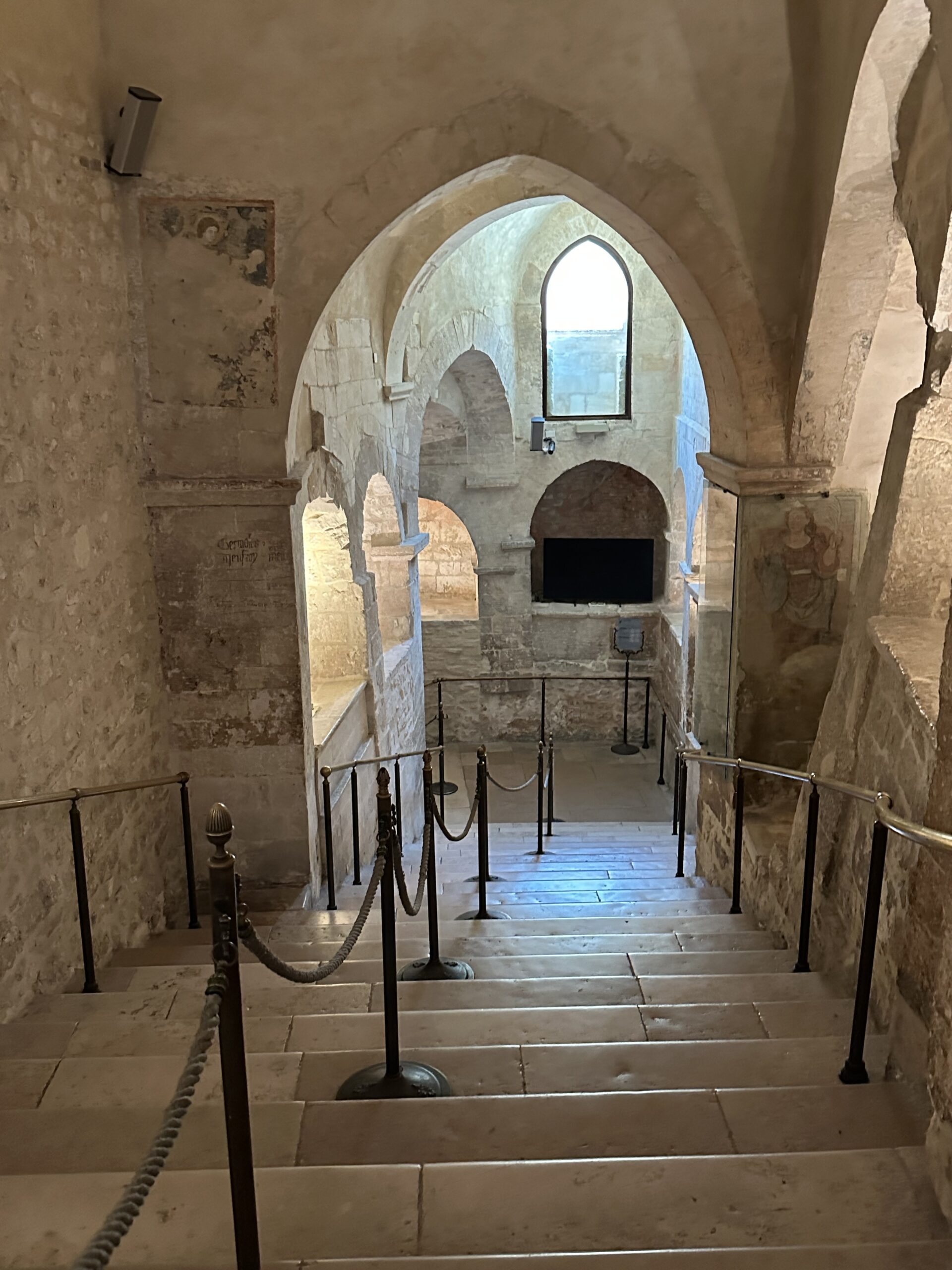
People have been climbing this mountain to pray in a cave for more than 1,500 years. Kings, Crusaders, Saints, and Popes walked down the same stone staircase you will. And when you reach the bottom, the church gives way to bare rock — because the cave was here first, and everything else was built around it.
Where Monte Sant’Angelo is
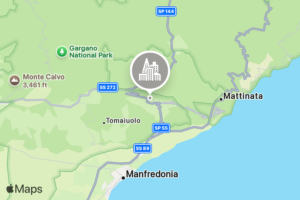 Monte Sant’Angelo is in northern Puglia, in the province of Foggia, deep in the Gargano National Park. The Gargano is the “spur” on Italy’s boot, and this whitewashed town sits near its crown, looking out over the Gulf of Manfredonia — on a clear day you can see all the way to the Tremiti Islands.
Getting here means driving up into the mountains. It’s about an hour from Foggia, and it pairs perfectly with San Giovanni Rotondo (Padre Pio’s town is just down the road) or a Gargano coast trip to Vieste and Manfredonia. The road up is winding and beautiful — olive groves giving way to beech forest — and then suddenly the white town appears against the sky.
The History: Three Apparitions and a Warrior Angel
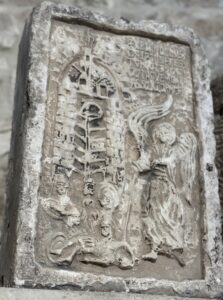
The story begins around the year 490. A wealthy landowner named Garganus lost the finest bull of his herd, found it kneeling before a cave on the mountain, and in anger fired an arrow at it — the arrow turned in midair and struck him instead. The local bishop, Lorenzo Maiorano of Siponto, didn’t know what to make of it. Then the Archangel Michael appeared to him and declared the cave sacred: a place where sins would be pardoned for all who entered.
These were the first recorded apparitions of Saint Michael in Western Europe.
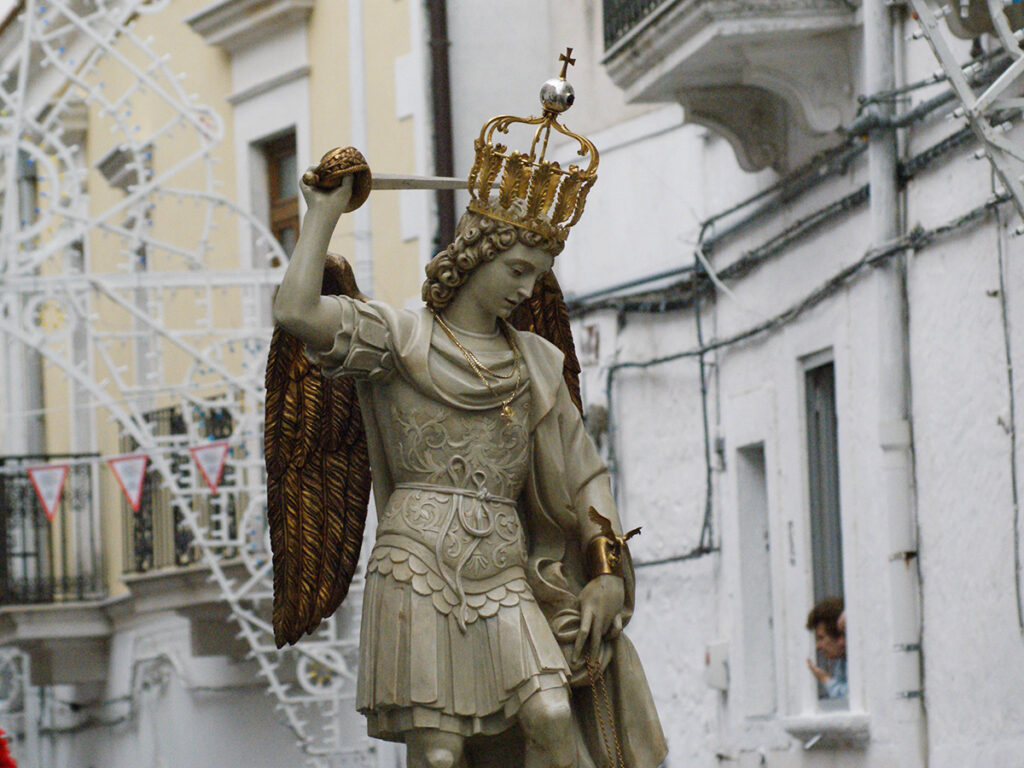
Three apparitions
The bull, the battle, and the consecration — recorded in a medieval Latin text called the *Liber de apparitione Sancti Michaelis in Monte Gargano
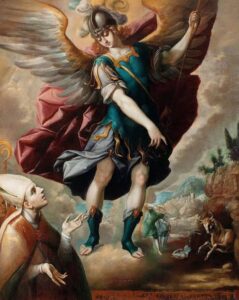
The Bull
(The year 490) Michael told the bishop the cave was under his protection and should be dedicated to Christian worship. See above
The Battle
(May 8, 663).** The Lombards of Benevento, facing a Byzantine army, prayed to the Archangel. On the eve of battle, Michael appeared atop the mountain with a flaming sword amid a great storm, and the Lombards won. The Duke of Benevento, Grimoald I, credited the victory to him. A feast was instituted on May 8 — the *Apparitio Sancti Michaelis* — that spread through the whole Western Church.
The Consecration of Monte Sant’ Angelo
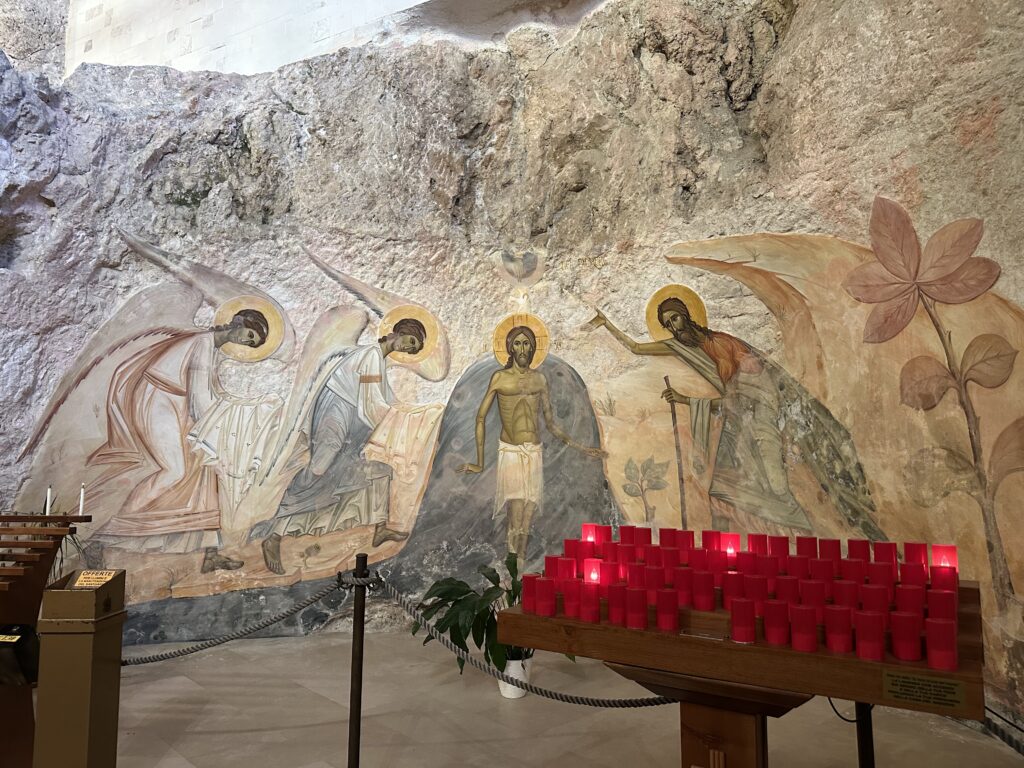
When Bishop Lorenzo came to dedicate the cave as a church, the Archangel told him there was no need: he had consecrated it himself. No human hands would ever consecrate this church. To this day, it never has been.
The Lombards adopted Michael as their warrior-protector and poured wealth into the sanctuary. Popes, emperors, and Normans followed — Frederick II altered the castle above the town, Charles I of Anjou built the great octagonal bell tower. In 1987, Pope John Paul II came to pray in the grotto. In 2011, UNESCO inscribed the sanctuary as part of the “Longobards in Italy: Places of Power” World Heritage serial site.
Why the Sanctuary Matters: A Faith That Crossed Europe
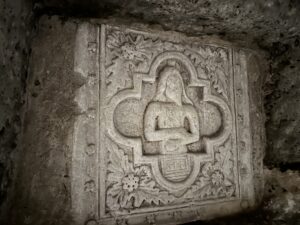
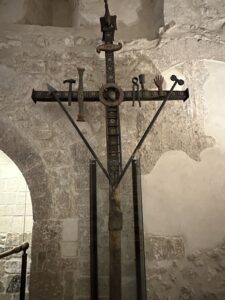 Here’s what makes Monte Sant’Angelo more than a beautiful old church: it became the beating heart of the pilgrims of Saint Michael across the entire continent. Pilgrims walked here from everywhere — and the proof is literally scratched into the walls. In the Lombard crypt below the grotto, you can still see runic graffiti left by northern European pilgrims in the 7th century, men who walked from beyond the Alps to stand in this cave.
The sanctuary anchored one end of a great medieval pilgrimage axis. Mont Saint-Michel in Normandy and Monte Sant’Angelo in Puglia — two Michael shrines, one in the north of Europe and one in the south, joined by the devotion of millions of walking pilgrims. Crusaders stopped here on their way to the Holy Land and again on their return. Saint Francis of Assisi came. Saint Thomas Aquinas came. Saint Catherine of Siena came.
And the mountain kept working miracles. In 1656, plague was ravaging the Kingdom of Naples. The Archangel appeared to Bishop Alfonso Puccinelli and promised the town would be spared — and it was. The townspeople still celebrate their deliverance every September 29, the feast of Saint Michael.
Why You Should Visit
Come for the grotto, stay for everything around it. This is what a day in Monte Sant’Angelo holds:
Descend into the Sacred Grotto
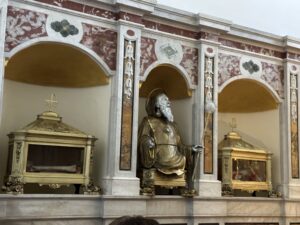
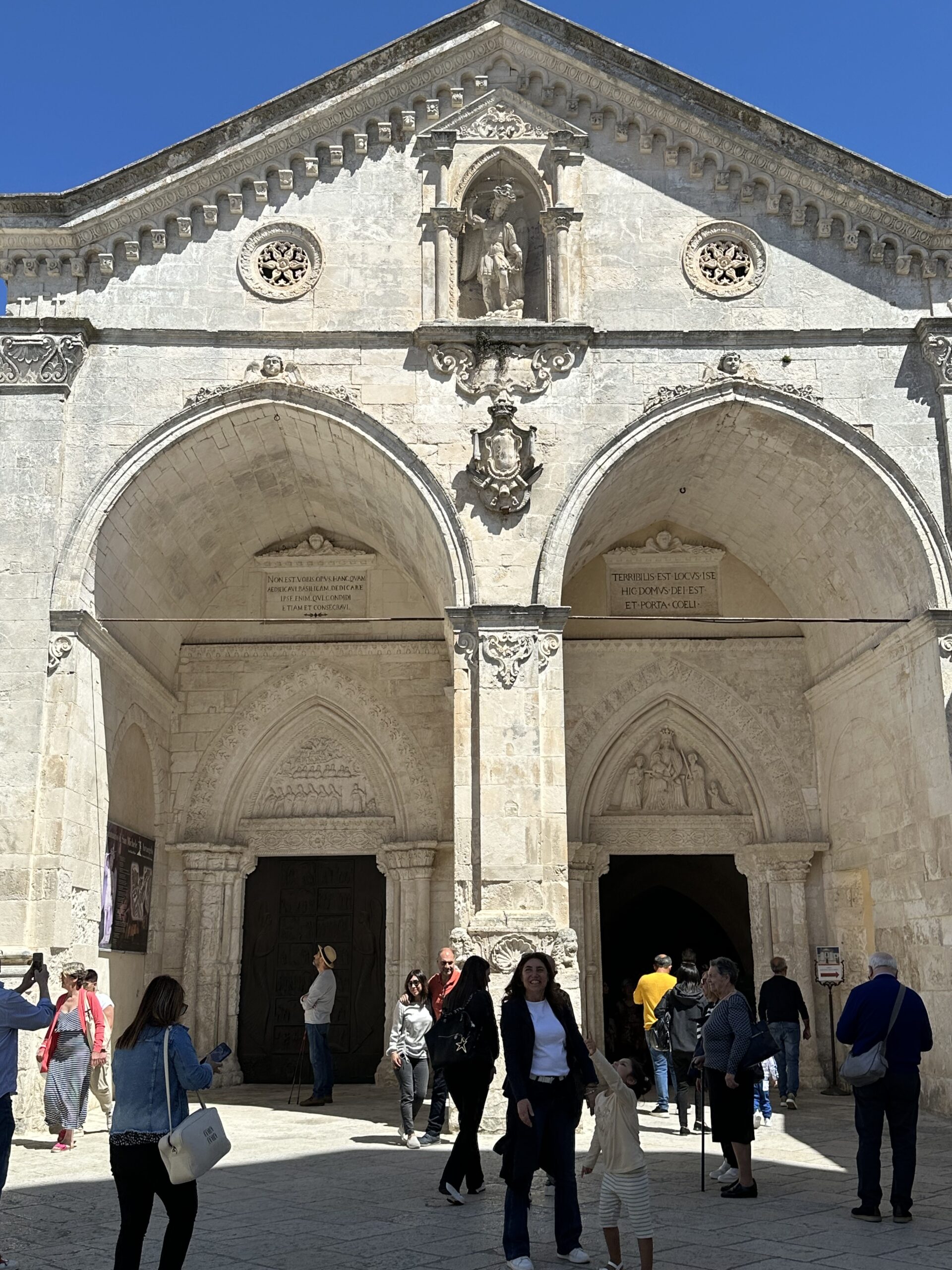
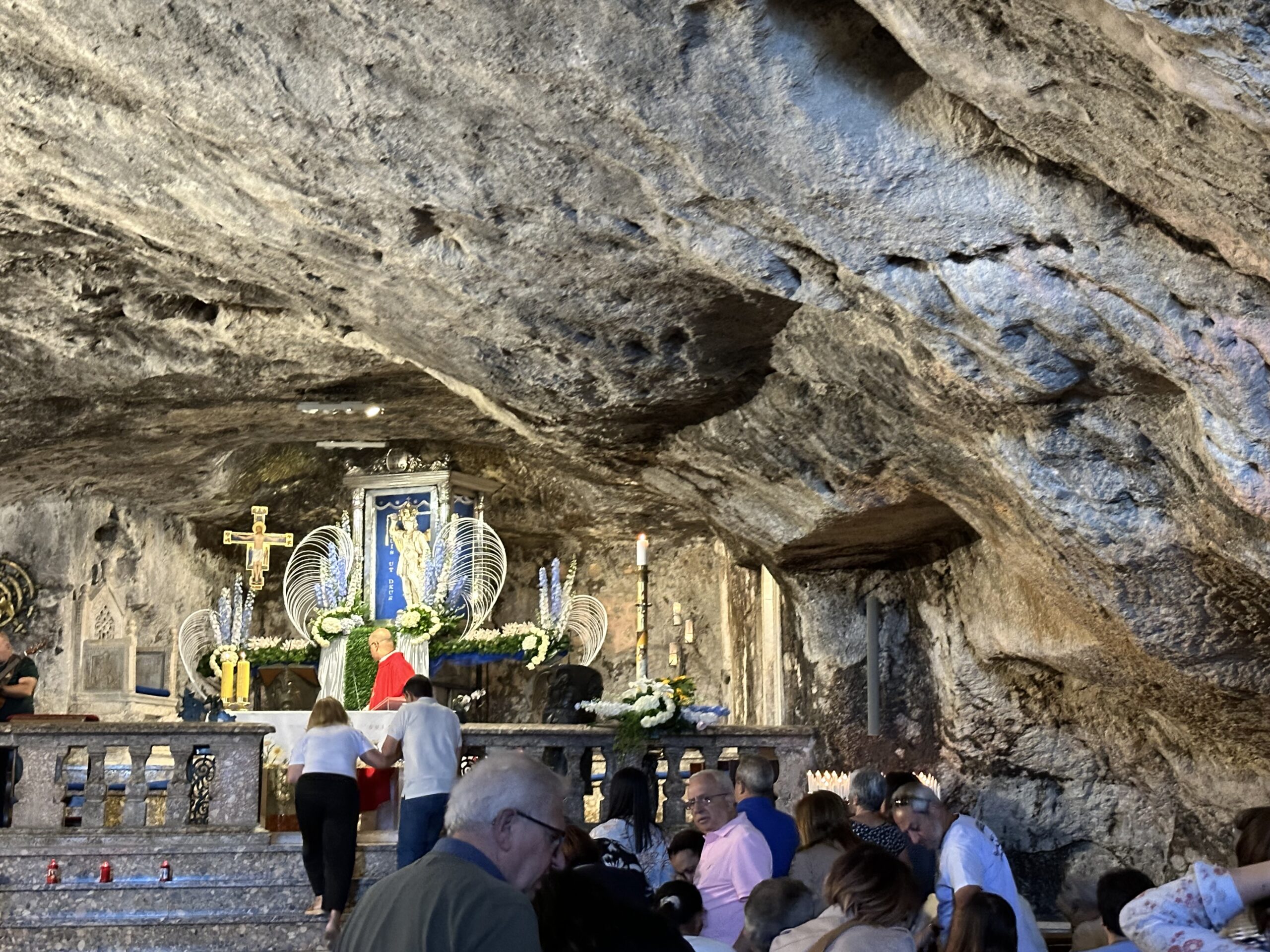
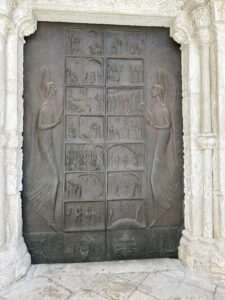
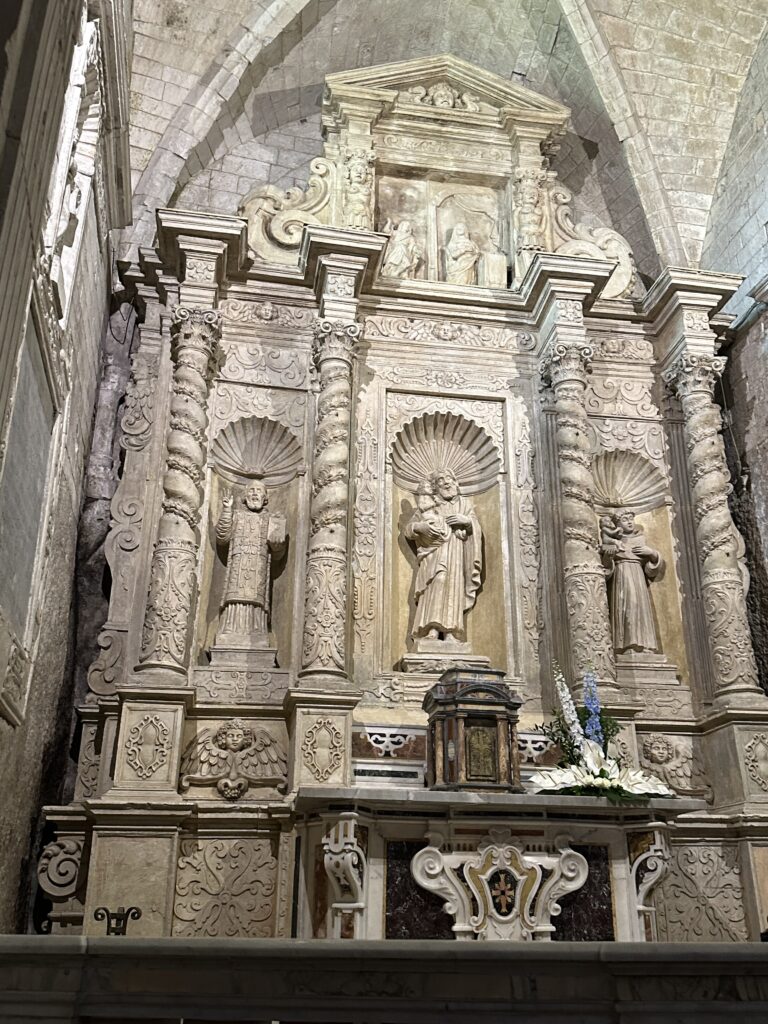
You enter through a double Gothic portico — the right-hand arch is a 1395 original — 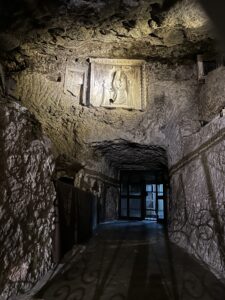 beside the great octagonal bell tower built in 1281. Then down, down a long stone staircase, the architecture gradually giving way to living rock. The 1078 bronze doors from Constantinople. The low, ancient cave. The marble statue of Saint Michael with his sword (Andrea Sansovino, 1507). The footprint in the stone where the Archangel is said to have stood. It is dim, cool, and utterly unlike any church you’ve entered — because it isn’t really a building at all.
The Lombard crypt and museum
A guided tour takes you into the lower crypt — 11th-century stonework, the old pilgrims’ entrance, and those runic inscriptions. A few euros, absolutely worth it.
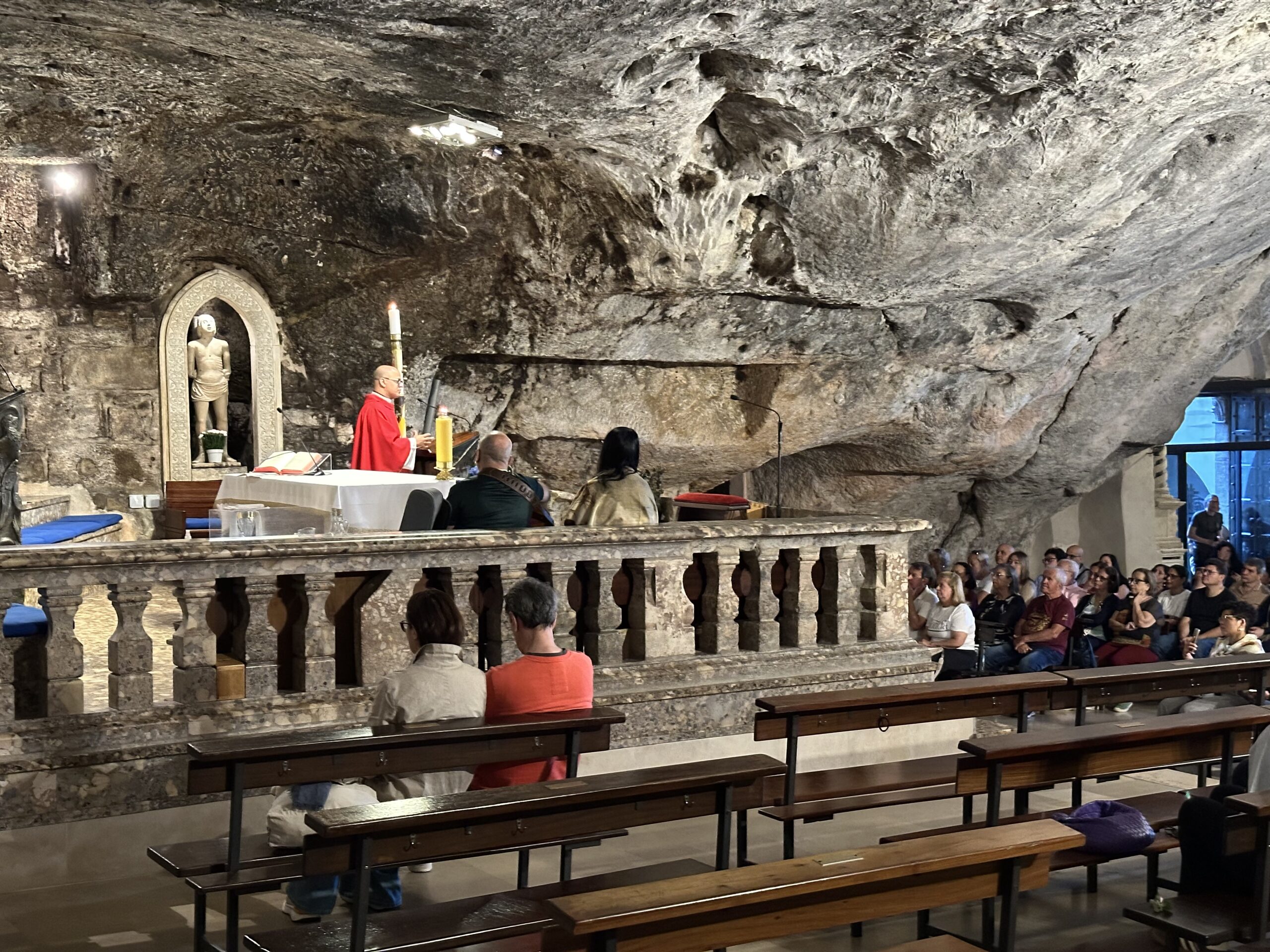
Watch a church service inside the grotto
The white town
The Rione Junno is the oldest quarter — a maze of whitewashed houses and stairways that feels like a mountain cousin of Ostuni. Wander it slowly.
The Norman-Swabian castle
Half-ruined, commanding, with the best views in town. Frederick II left his mark here.
San Giovanni in Tumba
The “Tomba di Rotari.” Just up from the sanctuary: a 12th-century baptistery with a magnificently carved portal, long misnamed as the tomb of the Lombard king Rothari. Next door, Santa Maria Maggiore holds 13th-century frescoes.
The Abbey of Santa Maria di Pulsano
A short drive below the town — a hermitage of cells carved into the cliff face, one of the most atmospheric spots in the Gargano.
The views
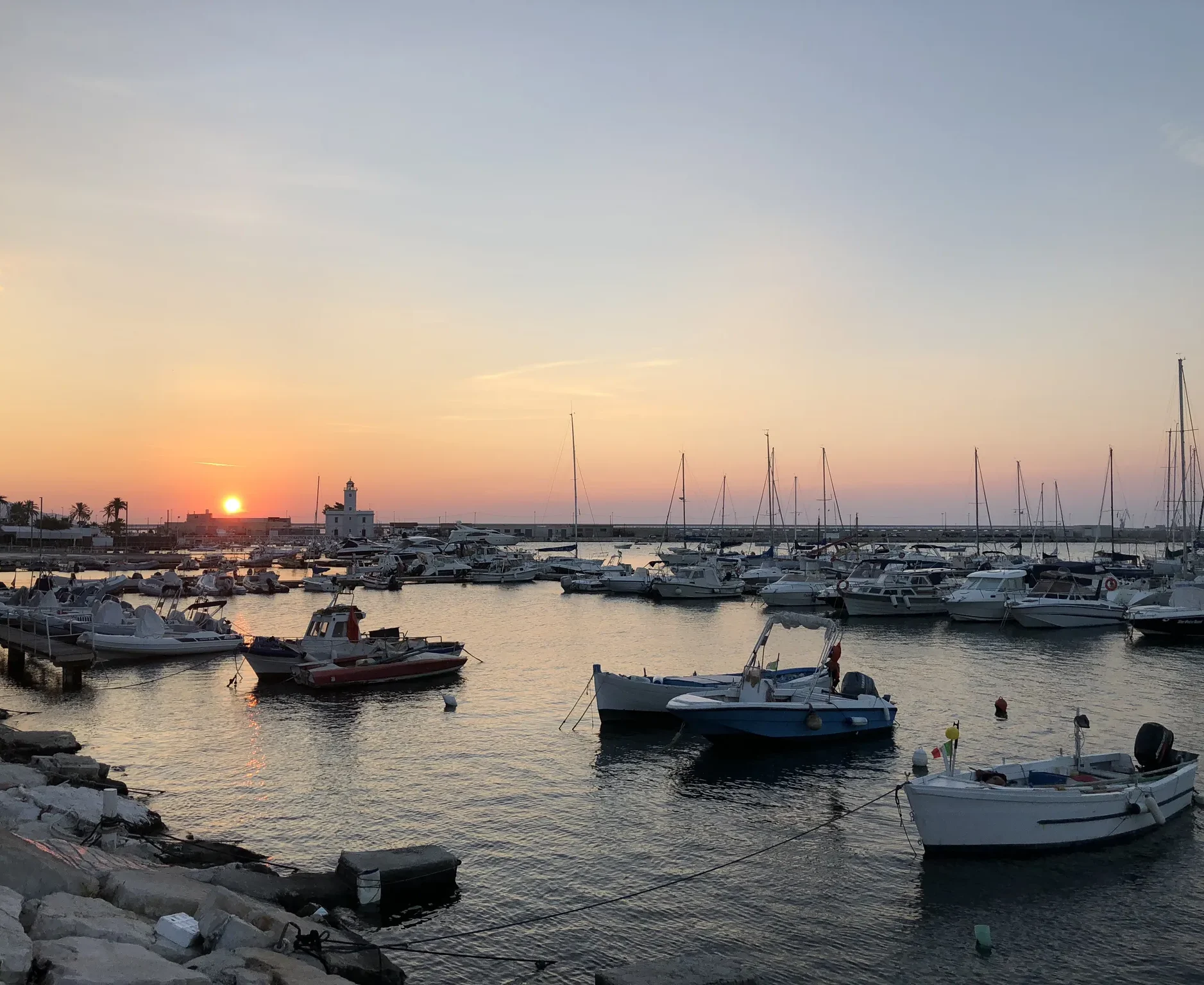
From the town’s terraces, the whole Gulf of Manfredonia spreads below you. Come at sunset if you can.
The Best Times to Visit Monte Sant’Angelo
 Spring (April–June) and autumn (September–October) are ideal — mild air, wildflowers or harvest colors, and the crowds are thin. The mountain weather is cooler than the coast, which is a blessing in the shoulder seasons.
The feast days are the great exception — come then if you want the full experience. September 29th is the feast of Saint Michael, with solemn masses, a procession, music, and the whole town celebrating its deliverance from the plague.
May 8th marks the Apparition of Saint Michael, the ancient Lombard feast. Both are deeply felt, very local, and unforgettable — but book your stay early, because pilgrims pour in.
Summer brings events and religious celebrations, but also heat and tour buses. Winter is quiet and mystical — the grotto in near-solitude is something special — but check opening hours, as some sites reduce them.
When to See a Mass in the Grotto of Monte Sant Angelo
 The sanctuary is an active place of worship with daily Mass, and attending one inside the grotto is the single most moving thing you can do here. As a general guide:
Monday to Friday: Masses at 8:00 AM, 9:30 AM, 11:00 AM, and 4:00 PM
Saturday and Sunday: Masses at 7:30 AM, 9:00 AM, 10:30 AM, 12:00 PM, 3:30 PM, 4:30 PM, and 6:00 PM
The sanctuary is generally open 7:30 AM–1:00 PM and 2:30 PM–7:00 PM (longer on Sundays)
**Important:** schedules change with the seasons and around feast days. Before you go, check the sanctuary’s official site (santuariosanmichele.it) or call +39 0884 561150 to confirm the day’s Mass times. If you want to attend the great feast-day Masses on May 8 or September 29, arrive early — the grotto fills.
A few practical notes: this is a working shrine, not a museum — cover your shoulders and knees. Entrance to the sanctuary is free; the crypt tour costs a few euros. Photography inside the grotto is restricted, so put the camera away and just be there.
What to Eat While You’re Up There
The mountain has its own kitchen. Taste the bread of Monte Sant’Angelo, baked in wood-fired ovens; caciocavallo podolico, the sharp local cheese; orecchiette with fresh tomato sauce; and the *ostie* — traditional sweets filled with honey and almonds. The town’s restaurants are pilgrim-priced and generous.
Make It Part of a Gargano Journey
Monte Sant’Angelo is the spiritual high point of the Gargano, literally and otherwise. Pair it with San Giovanni Rotondo (Padre Pio’s shrine, a short drive away), the white beaches of Vieste, or the Romanesque cathedral of Manfredonia below. Two or three days on the Gargano, with the mountain at the center, is one of the great underrated itineraries in Puglia.
A cave consecrated by an angel. Fifteen centuries of pilgrims, and a white town in the clouds above the sea.
Monte Sant’Angelo isn’t the Puglia of the brochures – its part of Puglia’s soul.
FAQs on Monte Sant’Angelo
 What is the Sanctuary of San Michele in Monte Sant’Angelo?
The Sanctuary of San Michele Arcangelo is a Roman Catholic shrine built around a natural grotto on Monte Gargano, in Monte Sant’Angelo, Puglia. It is the oldest shrine in Western Europe dedicated to the Archangel Michael, a pilgrimage site since the early Middle Ages, and part of the UNESCO World Heritage serial property “Longobards in Italy: Places of Power” (inscribed 2011).
Why is Monte Sant’Angelo important to Catholics?
According to tradition, the Archangel Michael appeared here around 490 AD — the first apparitions of Saint Michael in Western Europe — and consecrated the grotto himself, making it the only church never consecrated by human hands. The Lombards adopted Michael as their protector, and the shrine became one of medieval Europe’s great pilgrimage destinations, visited by saints including Francis of Assisi and Thomas Aquinas.
Is the Sanctuary of Monte Sant’Angelo a basilica?
Yes. The Sanctuary of Saint Michael the Archangel holds the designation of a minor basilica — its full formal title is the Basilica Sanctuary of Saint Michael the Archangel. Of course the 4 major basilicas are all in Rome (St. Peter’s, St. John Lateran, St Mary Major, and St. Paul Outside the Walls). There are approximately 1800 minor basilicas worldwide where the Pope has granted the title to churches of special historical, architectural, or spiritual importance.
What are the Mass times at the Sanctuary of San Michele?
As a general guide: Monday–Friday Masses at 8:00, 9:30, 11:00 AM and 4:00 PM; Saturday and Sunday at 7:30, 9:00, 10:30 AM, 12:00, 3:30, 4:30 and 6:00 PM. Schedules change with seasons and feast days — confirm at santuariosanmichele.it or +39 0884 561150 before visiting.
When is the feast of San Michele in Monte Sant’Angelo?
Two great feasts: May 8, the Apparition of Saint Michael (commemorating the Lombard victory of 663), and September 29, the feast of Saint Michael, when the town celebrates its deliverance from the 1656 plague with solemn Masses, a procession, and music. Both draw large pilgrim crowds — book accommodation early.
How do I get to Monte Sant’Angelo?
Monte Sant’Angelo is in the Gargano National Park, province of Foggia, about an hour’s drive from Foggia up winding mountain roads. It combines well with San Giovanni Rotondo (Padre Pio’s shrine), Manfredonia, and the Gargano coast towns like Vieste. The nearest airport is Foggia (Gino Lisa), roughly 68 km away.
Is Monte Sant’Angelo worth visiting if I’m not religious?
Yes. Beyond the grotto, there’s the UNESCO-listed Lombard crypt with 7th-century runic graffiti, a Norman-Swabian castle, the whitewashed Rione Junno old quarter, the 12th-century Tomba di Rotari baptistery, the cliff hermitage of Pulsano, and panoramic views over the Gulf of Manfredonia to the Tremiti Islands.