Martina Franca
If Locorotondo is the Valle d’Itria’s quiet jewel and Alberobello its postcard, Martina Franca is the valley’s real city: bigger, livelier, grander, and Baroque to its bones. About 47,000 people live here, and the old town is not a museum — it is a working place of shops, churches, palaces, and butcher’s grills, with an opera festival in a palace courtyard every summer.
That combination is the whole pitch. In Martina Franca, high culture and meat smoke share the same streets. You can spend the afternoon under Baroque facades, the evening at a rare opera, and dinner at a butcher’s counter, eating pork rolls cooked on a vertical grill.
The Free Town
Martina Franca began as a refuge. People fled here from Saracen raids on the coast in the tenth century, settling a hilltop above the valley. The town took its formal shape in the early fourteenth century, when Philip I of Anjou, Prince of Taranto, granted the settlement tax exemptions to attract inhabitants — farmers above all. “Martina” comes from San Martino, the patron saint and an earlier settlement on the spot; “Franca” comes from those franchises, the freedoms. The name is the history: a free town, founded on a tax break.
In 1507 it became a duchy, given to Petraccone III Caracciolo, and the Caracciolo family ruled it for some three hundred years, almost to the unification of Italy. They are the reason the town looks the way it does: the seventeenth century was Martina Franca’s golden age, and the family poured its wealth into palaces and churches.
Walking the Baroque Old Town
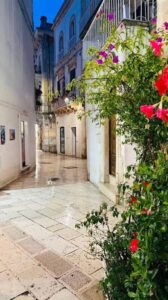 Enter through Porta Santo Stefano, the Baroque gate into the old town, and the lanes close in: whitewashed walls, wrought-iron balconies, flowers, and stone. The centre is enclosed by the remains of the old walls, with four Baroque gates surviving.
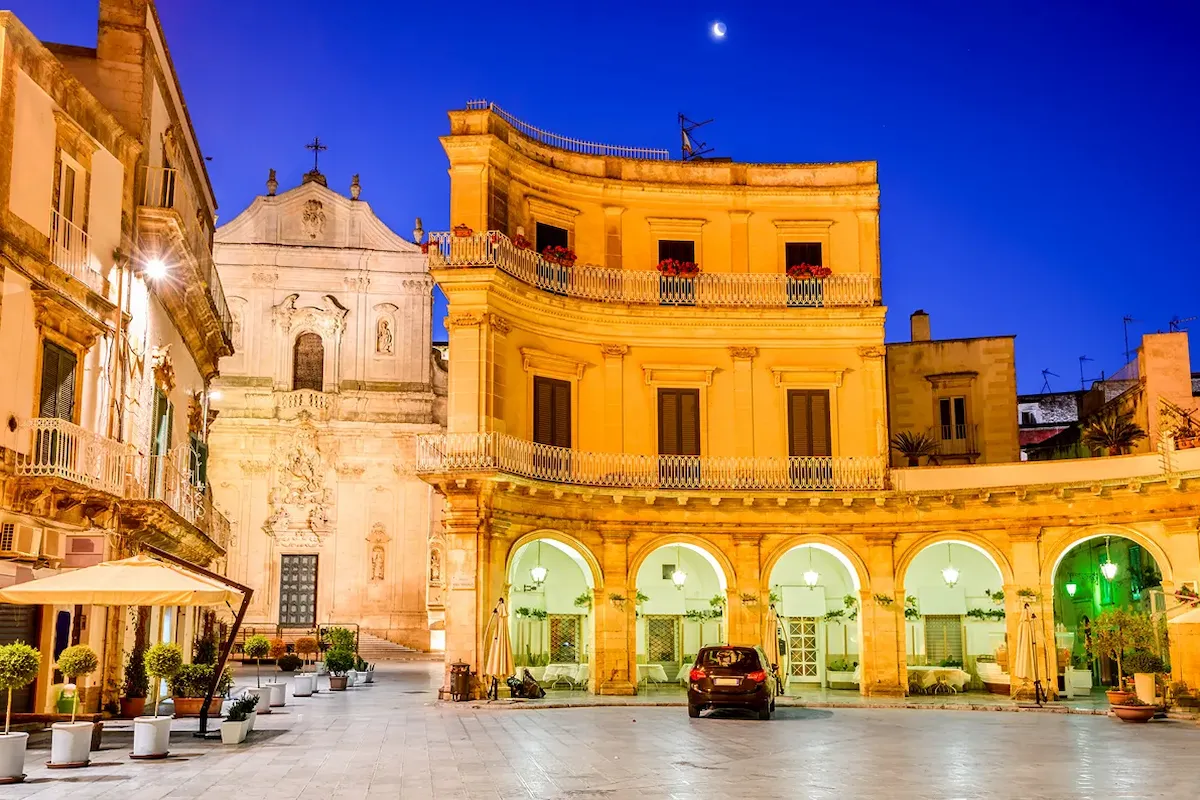
Two squares anchor it. Piazza Roma holds the Palazzo Ducale, the seventeenth-century Baroque palace commissioned by Duke Petracone V Caracciolo. It is the town hall now, but the state rooms on the piano nobile can be toured — tempera paintings of biblical scenes, court life, and mythology cover the walls — with guided visits bookable the day before.
In front of it stands the Fontana dei Delfini, the Fountain of the Dolphins.
Piazza Plebiscito holds the Torre dell’Orologio and the Basilica di San Martino, the eighteenth-century Baroque church dedicated to the town’s patron. The relic of San Martino arrived here in July 1712, and the patronal feast has been celebrated in July ever since.
Beyond the two squares, keep walking: the churches of San Domenico and Sant’Antonio, the smaller palaces, the side streets where the town goes quiet again. Martina Franca is not a sightseeing checklist; the pleasure is in wandering it.
Opera in the Palace Courtyard
Every July and August, the courtyard of the Palazzo Ducale becomes an opera house. The Festival della Valle d’Itria was founded in 1975, from a vision credited to Paolo Grassi — then superintendent of La Scala — and carried to life by Rodolfo Celletti, with Alessandro Caroli as its first president and the mayor Franco Punzi as its tireless soul for nearly half a century.
The festival’s mission is what makes it special: it stages obscure, neglected, and rarely performed operas, and it gives standard works in their original versions. The fiftieth festival, in 2024, revived Bellini’s Norma in its original two-soprano version, alongside Handel’s Ariodante and Nino Rota’s Aladino e la lampada magica. The audience sits outdoors, under the stars, in a Baroque courtyard — and the programming is the kind of thing you will not hear anywhere else. If you are coming in July or August, book ahead: this is the town’s biggest season.
Dinner at the Butcher’s Grill
The other Martina Franca institution needs no ticket. The fornelli pronti — the butcher-grills — are the town’s most delicious tradition, and the most Martina thing you can do.
Here is how it works. You walk into the macelleria and stop at the counter, where the meat is labelled and priced by weight. You pick a mix of two or three meats, a staff member weighs it, and you pay at the counter. A small cover charge, a couple of euros per person, covers bread, cutlery, and the table. Then you sit down, and while your meat cooks you eat whatever the butcher has cured himself: capocollo, fresh ricotta, pancetta, sometimes scamorza or burrata from a nearby producer.
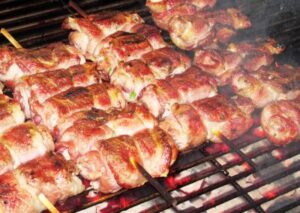
The cooking is the point. The meat goes onto spiedi — vertical skewers cooked beside a wood fire, usually oak or beech charcoal, by radiant heat rather than direct flame. The result is crisp outside, soft inside, and unmistakably wood-smoked. On weekends the wait can be long and reservations are essential; many fornelli now take bookings online or by phone, and walking in on a Saturday night is unlikely to end with dinner.
Order the bombette. “Little bombs” — thin slices of pork wrapped around soft cheese, usually scamorza or caciocavallo, sometimes with pancetta, prosciutto, or chilli. They were invented here in Martina Franca in the 1960s, credited to Maria Giliberti, wife of the butcher Ninuccio Lasorte, who began with horse meat before switching to pork. The breaded version is a Cisternino innovation from the 1980s. A skewer of four or five is more than it sounds.
The Famous Capocollo di Martina Franca
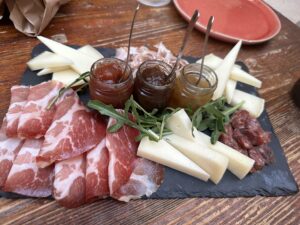
And do not leave without tasting the capocollo di Martina Franca, the town’s famous cured pork neck, gently smoked — it hangs in the butchers’ windows and shows up on every antipasti plate in Martina Franca- but also throughout Puglia.
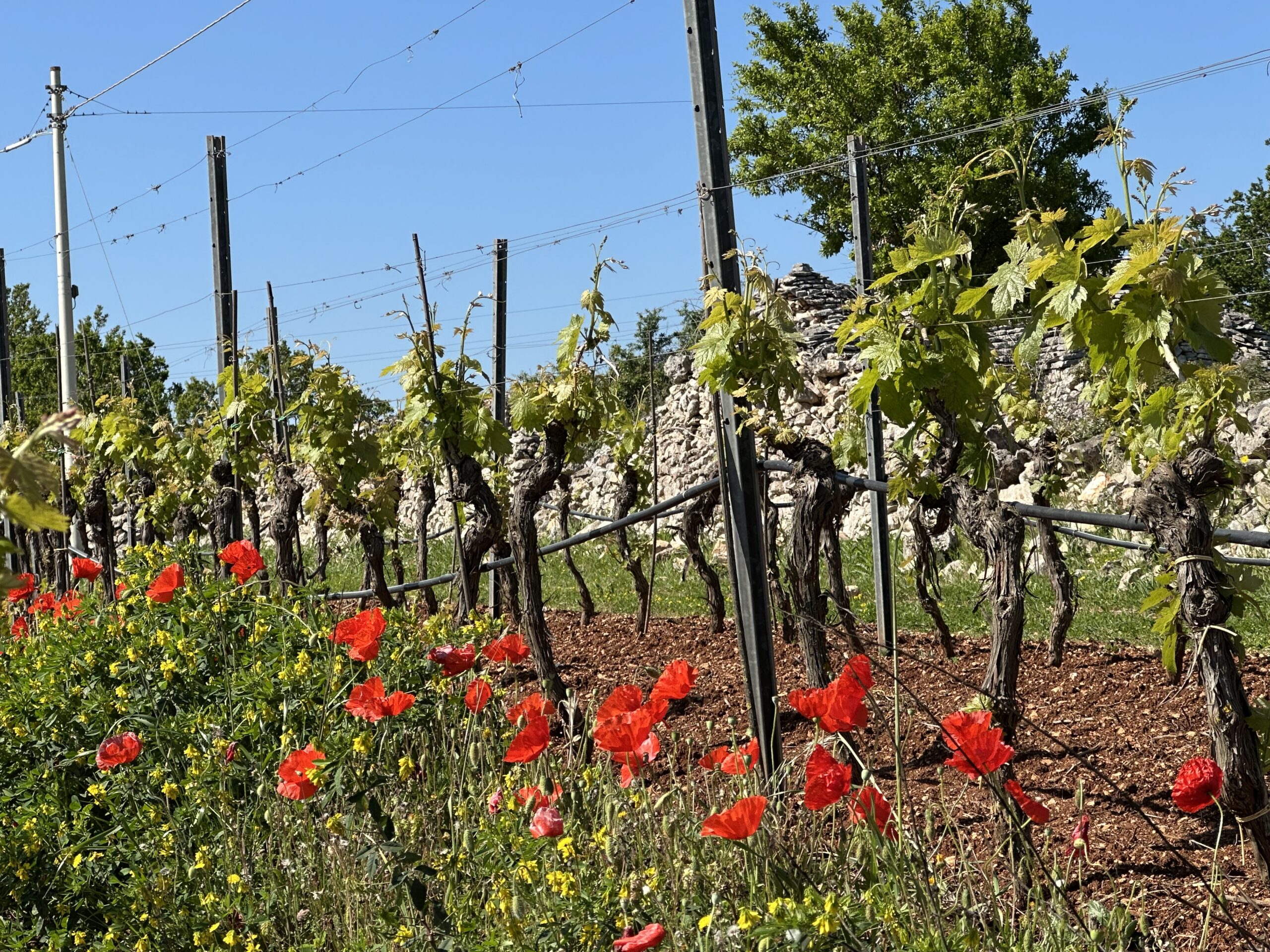
Wash it down with the local white: Martina Franca DOC, created in 1969, built on Verdeca and Bianco d’Alessano grapes.
Where to Stay in Puglia
10 Great things to do in and around Martina Franca
1. Walk the Baroque old town
Enter through Porta Santo Stefano and wander the whitewashed lanes, wrought-iron balconies, and four surviving Baroque gates. The pleasure is in the wandering, not a checklist.
2. Tour the Palazzo Ducale state rooms
The 17th-century palace on Piazza Roma is the town hall now, but the piano nobile rooms with their tempera paintings can be toured with a guided visit booked the day before. The Fontana dei Delfini stands in front of it.
3. Piazza Plebiscito
The Torre dell’Orologio and the Basilica di San Martino, the 18th-century church of the town’s patron, whose relic arrived here in July 1712.
4. Visit the quieter churches
San Domenico and Sant’Antonio, plus the smaller palaces and side streets where the town goes quiet again.
5. Opera in the palace courtyard
The Festival della Valle d’Itria runs July–August in the Palazzo Ducale courtyard, staging rare and neglected operas you won’t hear anywhere else. Book ahead; it’s the town’s biggest season.
6. Dinner at a Fornello Pronto
Pick your meat at the butcher’s counter, priced by weight, pay a couple of euros’ cover, and eat it off vertical spiedi skewers cooked beside an oak or beech fire. Order the bombette (invented here in the 1960s), taste the gently smoked capocollo di Martina Franca, and wash it down with the local Martina Franca DOC white. Weekend reservations are essential.
7. Visit some wine estates, and taste spectacular Puglian wines
1. I Pastini, between Martina Franca and Locorotondo — the native-grape specialist. Family-run since 1996 on 12 hectares, working the valley’s own varieties: Verdeca, Bianco d’Alessano, and Minutolo whites, plus Susumaniello and Primitivo reds. Rated 4.9 out of 5 from 122 reviews. This is the one for tasting the Martina Franca DOC whites at their source. Reserve your tasting in advance or visit the wine bar, La bottega “Cummè,” in central Locorotondo.
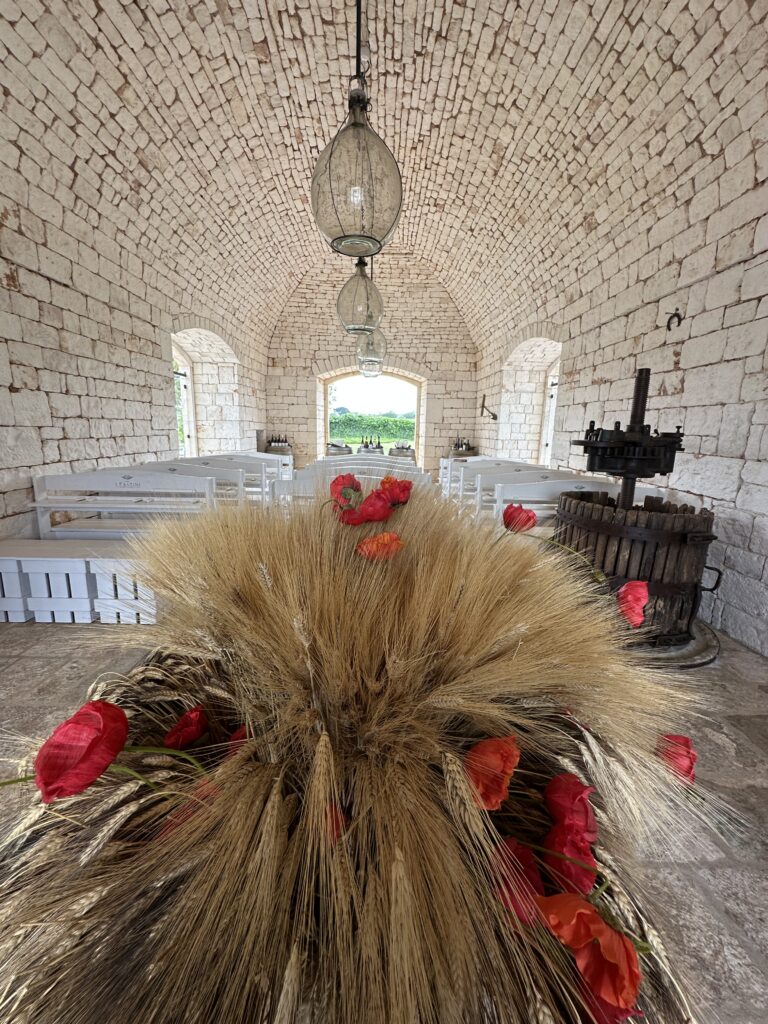
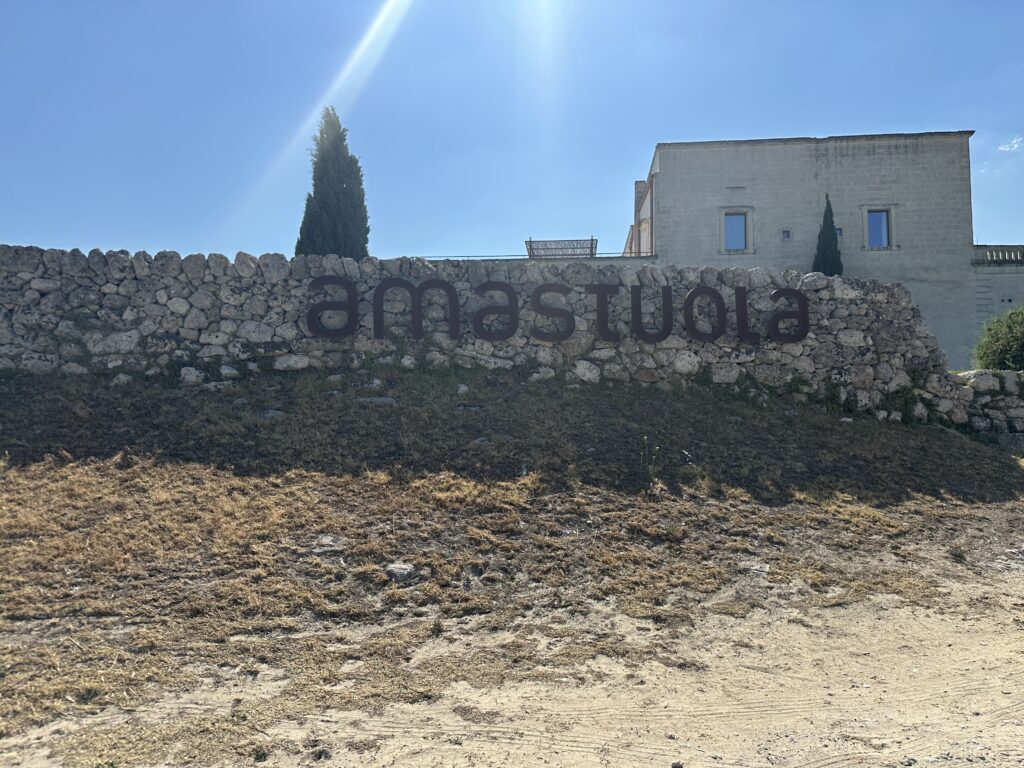
2. Masseria Amastuola, Crispiano (about 11 miles away) — the grand estate experience. A 15th-century masseria set among centuries-old olives and a unique vineyard garden, producing organic wines. It’s a wine resort, so tours and tastings are part of the setup, and it’s rated 5.0 out of 5 from 202 reviews. Come here for the reds and the setting rather than the whites.
3. Cantine MIALI, in Martina Franca town — the historic cellar, on Via Madonnina. The easiest of the three to fit into a day in town, no countryside drive needed.
8. Experience an Olive Oil Tasting
In Martina Franca: Tenute Girolamo, Via Noci 314 — a 2-hour guided tour of a medieval underground olive mill (frantoio ipogeo, once used to press lamp oil), ending with a tasting of local extra virgin oils served with fresh bread. About €30 a person. A similar Martina Franca mill tour pairs a tasting of three oils with a platter of mozzarella, olives, Apulian focaccia, Martina Franca capocollo, and a glass of regional wine.
In the valley: oil and wine tasting at Trullo Otium — a historic trullo in a private olive grove in the Itria Valley. Guided tasting of local oils (Coratina, Ogliarola, Cima di Mola) with bread and friselline, then three wines from small Apulian wineries with cheese, taralli, and cured meats, finishing as an aperitivo under the olive trees.
9. Visit a Masseria Experience the local cheeses including Mozzarella, and Burrata making
1. Masseria Seppunisi, Ceglie Messapica
Our the top pick. About 2–2.5 hours, small groups (max 10): meet the cows, watch the cheesemaking, make your own mozzarella and burrata by hand, then a tasting lunch with wine. Around $50 a person.
2. Masseria Cappella, near Martina Franca
A 2.5-hour visit with a mozzarella and burrata workshop plus bread and fresh pasta making. The cheese tasting is an optional add-on on some tours, so confirm it when booking.
3. Masseria Madonna dell’Arco,
In Martina Franca itself — also runs burrata experiences.
4. Southern Visions, Locorotondo
“Secrets of Artisan Burrata,” 90 minutes. No published reviews found.
10. Cycling tour
1. Puglia On Bike, Locorotondo (Vico Grazia Deledda 1, +39 351 515 9003) — guided e-bike loops through the Itria Valley. The popular route runs about 39 km to Martina Franca’s Baroque old town and on to Alberobello’s trulli, on quiet country lanes lined with dry-stone walls, vineyards, and olive groves, with a gelato stop. Helmets and a local guide included. E-bike rental around €45, optional dairy/cheese stop about €10.
2. E-bike Tour Alberobello — based at Contrada Popoleto 6, in the Martina Franca area (+39 349 578 6980).
3. Excursions Electric Bike Rental Corso dei Mille 188/A, right in Martina Franca (+39 349 195 8785), for renting e-bikes and riding on your own.
SPECIAL CAR TOURS
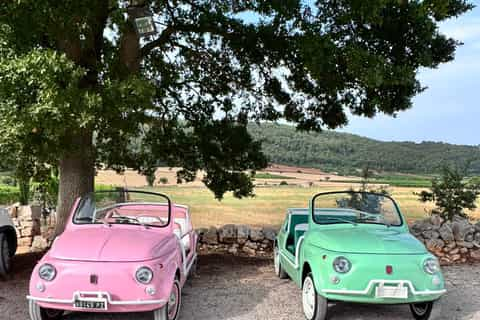
– Vintage Fiat 500 Photo Quest Tour, Valle d’Itria — about 3 hours self-driving a classic Fiat 500, starting at Giardini Pistola (Selva di Fasano), with an illustrated map and GPS route taking in Locorotondo, Martina Franca’s Baroque center, and the trulli. Around $150. You must be 18 or older, hold a valid driver’s license, and be able to drive a manual gearbox. No guide rides along.
– Ape Calessino guided tour, Itria Valley — a private ride in the open-sided vintage three-wheeler between Ostuni and Alberobello, with a driver-guide and stops in Cisternino, Locorotondo, and Alberobello. Around $496 for two people. Weather-dependent.
– Valle d’Itria Fiat 500 Spiaggina wine tour — meet in Ostuni, drive the vintage open-top Fiat 500 through trulli country to a local winery for a guided tasting and aperitif, then back to Ostuni.
Restaurants for Foodies in Martina Franca
1. Nausikaa, Via Arco Fumarola 2 — the foodie destination. Two brothers run it (Martino hosts, Francesco cooks) in a Baroque old-town setting with star-vaulted ceilings. The menu changes daily based on what the market offers, built on local products with traditional flavors revisited in a modern key, homemade desserts, and a cellar that leans Puglian. It describes itself as a regular haunt of gourmets.
2. La Locanda del Macellaio, Via dei Caduti in Russia 3 — The meat pick. A butcher’s steakhouse, the sit-down version of Martina Franca’s fornello tradition, with salumi and grilled meats at the center.
3. Osteria del Coco Pazzo, Via Arco Mastrovito 18 — the classic osteria of the three, in the old town- the priciest of the trio, so the one to book for a proper night out.
Getting There
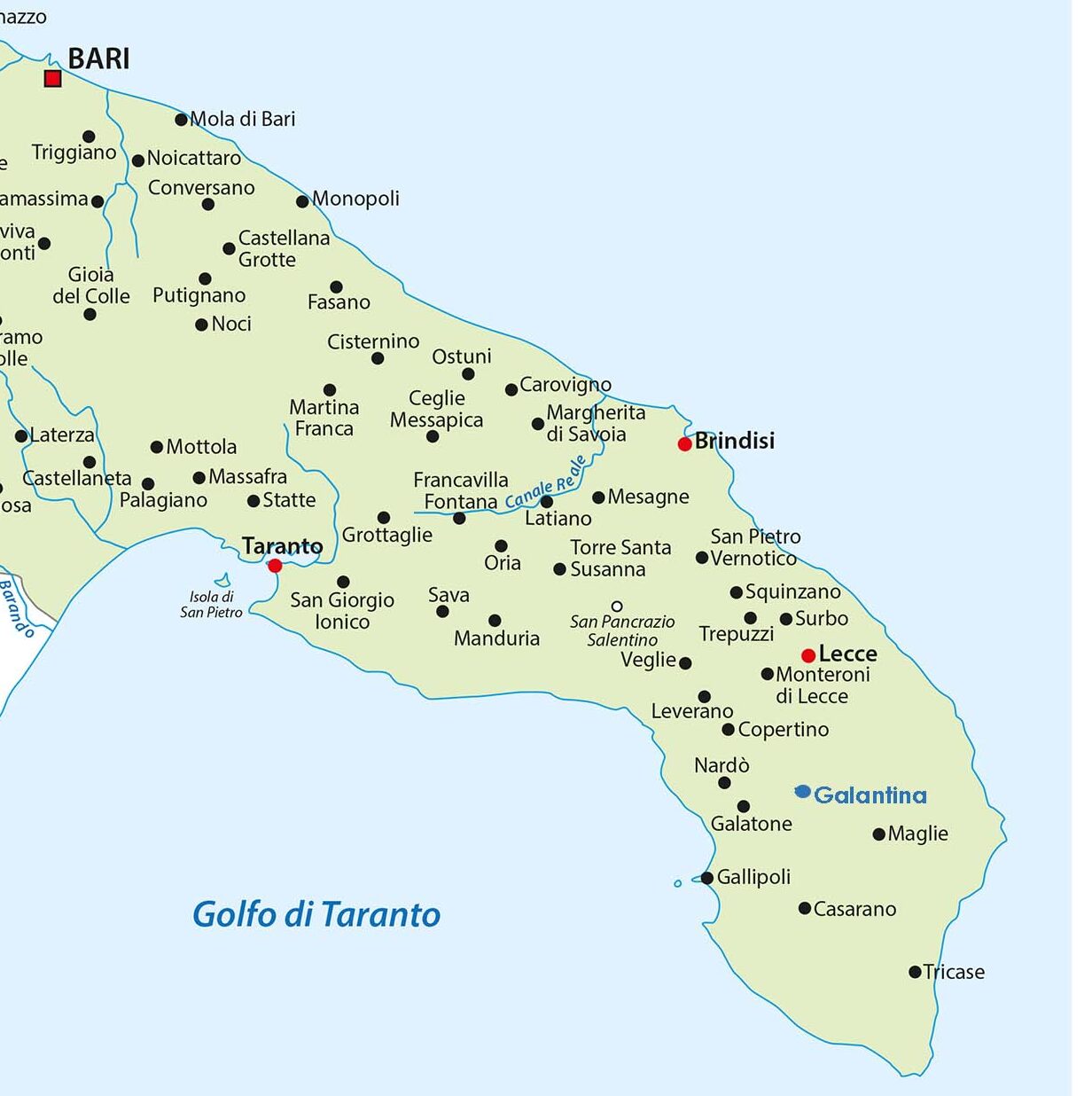
Martina Franca sits about 75 kilometres from Bari, roughly an hour by car, and ten minutes from Locorotondo. Alberobello, Cisternino, and Ostuni are all a short drive away, which makes it an easy anchor for a Valle d’Itria day — or a base in its own right, livelier in the evening than the smaller towns.
Trains run from Bari Centrale on the Ferrovie del Sud Est line, about eight connections a day, taking around two and a quarter to two and a half hours, sometimes with a change at Putignano, for about seven or eight euros. The station is on Viale Europa, a short walk from the historic centre.
Give it half a day at minimum: the old town, the palace rooms, and a fornello dinner. Give it a full day if you want the churches at leisure and an evening performance in festival season. July and August bring the opera; the meat, the Baroque, and the whitewashed lanes are year-round.
Martina Franca is the Valle d’Itria grown up: a Baroque city that still works for a living, where the opera and the butcher’s grill are both part of the same evening. Come for the palaces. Stay for the bombette.
FAQ’s on the Martina Franca area
Are bombette from Martina Franca or Cisternino?
Martina Franca. Bombette were invented here in the 1960s, credited to Maria Giliberti, wife of the butcher Ninuccio Lasorte, who began with horse meat before switching to pork. The breaded version, with its crisp crust, is the Cisternino innovation, from the 1980s. Both towns serve them; Martina Franca invented them.
Do you need to book a fornello pronto?
On weekends, yes. The butcher-grills are small, the wait can be long, and many fornelli now take bookings online or by phone. Walking in on a Saturday night is unlikely to end with dinner. Weekday lunches are usually easier, but a reservation never hurts.
When is the Festival della Valle d’Itria, and do you need tickets in advance?
Every July and August, with main performances in the outdoor courtyard of the Palazzo Ducale. Yes, book ahead — the festival is the town’s biggest season, the courtyard holds a limited audience, and the rare-opera programming draws an international crowd.
Can you visit Martina Franca without a car?
The town itself, yes. Trains run from Bari Centrale on the Ferrovie del Sud Est line, about eight a day, taking roughly two and a quarter to two and a half hours for about seven or eight euros, and the station is a short walk from the historic centre. For the wider Valle d’Itria — Locorotondo, Alberobello, Cisternino — you will want a car.
Is Martina Franca worth visiting if you have already seen Locorotondo and Alberobello?
Yes, and for the opposite reason. Locorotondo and Alberobello are small and picture-perfect; Martina Franca is bigger, livelier, and Baroque — a real city with a ducal palace, an opera festival, and a food tradition (bombette, capocollo, fornelli) the smaller towns cannot match. It is the valley grown up.