Here are a few of our favorite hikes in Southern Puglia
Enjoy remarkable landscapes and breathtaking views

Grotto at Sentiero Cipolliane
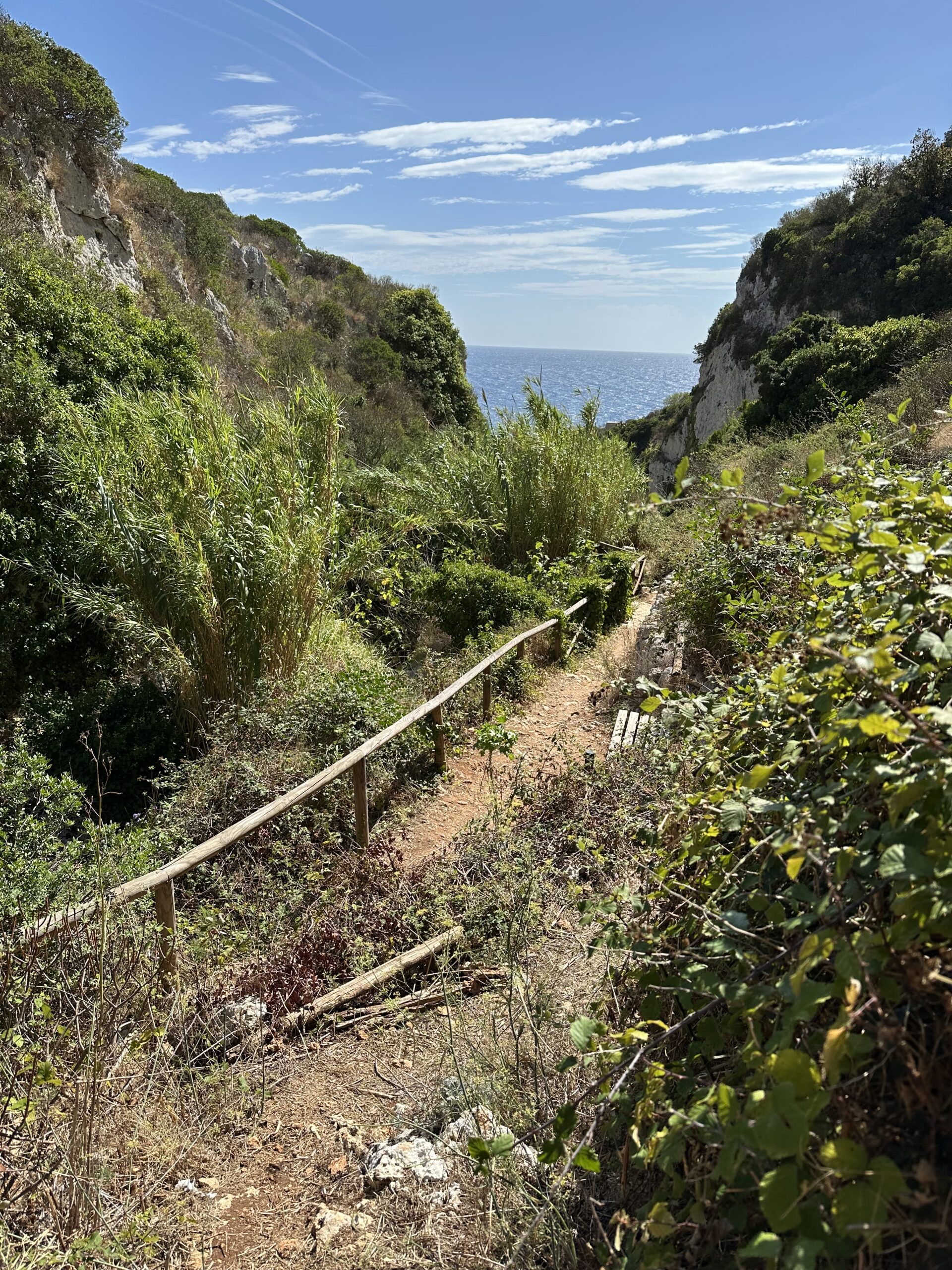
Sentiero delle Cipolliane

- Difficulty: Moderate / Moderately challenging due to uneven, bumpy, and sharp limestone rocks underfoot.
- Distance: Roughly 3.1 to 3.5 miles (5 km) for the standard loop.
- Time Required: Around 1.5 to 2 hours to complete the entire route
- Bring: Water, Towel, Sun Protection, Water shoes and possibly a pool noodle or float to aid in swimming to the Grotto


You can start the hike from either the Ciolo Bridge, or the Marina di Novaglie
Marina di Novaglie (Recommended for easier parking)
Starting from the harbor area near Torre Porto provides an accessible parking lot, a gradual introduction to the coastal cliffs, and lets you finish your walk at the Ciolo Bridge where you can grab a drink or cool off with a swim in the fjord below.
Ciolo Bridge / Ponte Ciolo (Recommended for dramatic scenery)

Zinsulusa Cave (Grotto Zinsulusa)

The legend of Zinzulusa
According to local Salento folklore, a wealthy and hard-hearted baron lived near Castro. He was so consumed by greed and saving money that he neglected his young daughter and forced her to live in extreme poverty. The poor girl was forced to wear wretched, tattered rags instead of proper clothes. Feeling pity for the suffering child, a good fairy appeared one day. The fairy provided the girl with a magnificent, beautiful new dress and tore her old, worn-out rags to pieces.
The wind carried the shreds of the old clothing away until they stuck to the walls of the nearby coastal cave, where they instantly petrified. These stone formations looked so much like hanging shreds of cloth that locals named the cavern Zinzulusa
The beauty of Zinzulusa
Formed by prehistoric underground rivers and continuous erosion from the Adriatic Sea, it offers a striking visual journey that transitions seamlessly from a sunlit coastline into an otherworldly subterranean landscape.
Visitors arrive via a narrow, scenic walkway carved directly into a sheer limestone cliff face. This path frames panoramic views of the crystal-clear aquamarine sea clashing against the massive cave entrance, which rises over 15 meters high. Looking out from the shadow of the entrance – back at the sunlit coast is considered one of the most stunning vistas in Puglia
The science of Zinsulusa
- Unrivaled Biodiversity: Despite its relatively small size, the cave is a major biodiversity hotspot. It harbors over 60 endemic subterranean and aquatic species (stygobitic taxa), making it one of the richest and most diverse cave ecosystems in all of Europe.
- Living Fossils: It serves as a sanctuary for ancient, unique lineages found nowhere else on earth. This includes the blind cave shrimp (Typhlocaris salentina) and specialized hypogeum sponges.
- A Rare Stratified Ecosystem: At the deep rear of the cavern lies the Cocito basin. This unique underwater pool features a stratified halocline—a perfectly separated layers where cold freshwater sits directly on top of warmer, brackish seawater. This phenomenon creates highly specialized marine micro-habitats that are actively studied by international geologists.
- Critical Protection Status: Because the cave’s delicate ecosystem is threatened by regional urban runoff and heavy tourism, its “top 10” status serves as an active, protected conservation warning to preserve its fragile environment.
 The Tragedy of Guano
Over the year the bat feces was used as fertilizer, and even in bomb-making. Of course it was also done to create a more attractive tourist site within the cave. Inside the cave you will see grafitti/names left by workers employed to harvest the guano- Indelible as the names were actually written in guano.
Unfortunately guano mining is deadly, and the names that you see probably didn’t survive many more years.
Histoplasmosis (Cave Disease): Guano harbors a deadly fungus called Histoplasma capsulatum. When old, dry bat or bird droppings are disturbed, millions of microscopic fungal spores launch into the air. Workers who inhaled these spores contracted severe, often fatal lung infections.
Ammonia and Toxic Dust Explosions: In enclosed or heavily concentrated spaces, digging into centuries of compressed guano releases toxic levels of ammonia gas. The air became so thick with caustic dust that it routinely caused asphyxiation and respiratory failure
- Location: Near Castro Marina in the province of Lecce, Salento, Italy.
- Tour Cost & Length: Guided tours run frequently and tickets cost around €6 per adult and last about 30 to 40 minutes. You enjoy a 15 minute hike to the mouth of the cave, and then a guide takes you in. Swimming is also available on the route
- Best Time: Visit in the shoulder months (like May, September, or early morning) to avoid large summer crowds
Porto Selvaggio Regional Nature Park
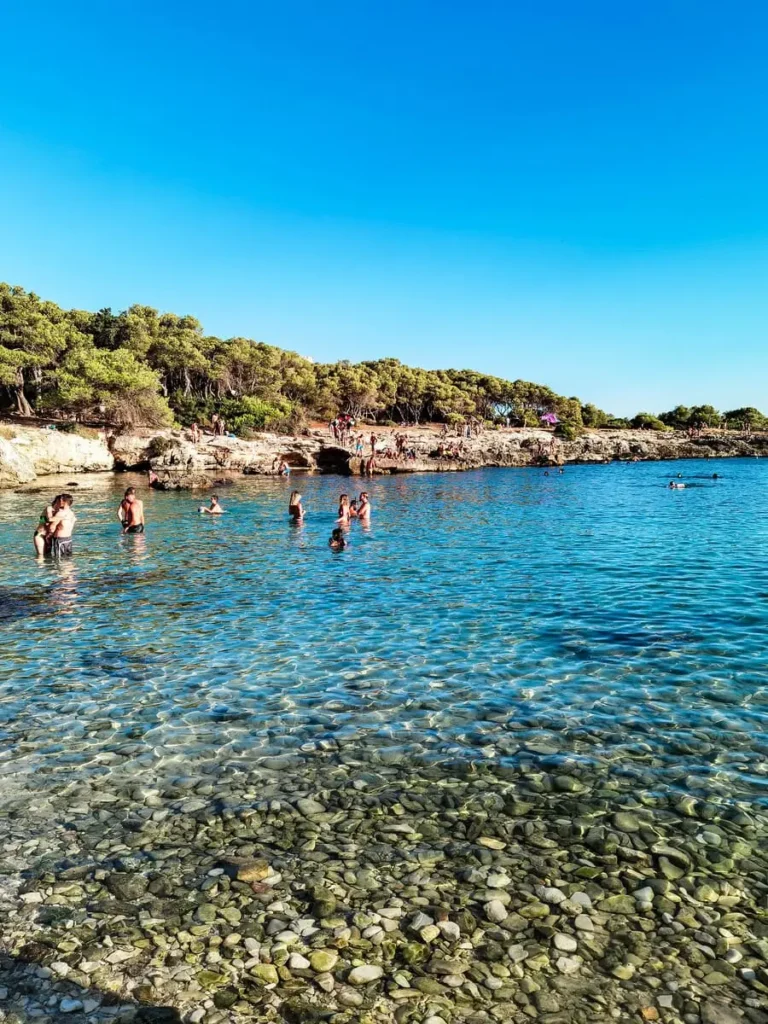
Situated on the Ionian coast near Nardò, it combines a thick pine forest and rocky limestone cliffs with hidden swimming spots fed by cool freshwater springs. Most of the park is blanketed by a thick, aromatic forest of Aleppo pines, myrtle, and wild rosemary originally planted in the 1950s. A network of dirt paths cuts through the shaded woods, shielding you from the sun as you hike
Perched high on the rocky spurs flanking the park are historic military lookout towers built in the 1500s to defend against Ottoman raids.
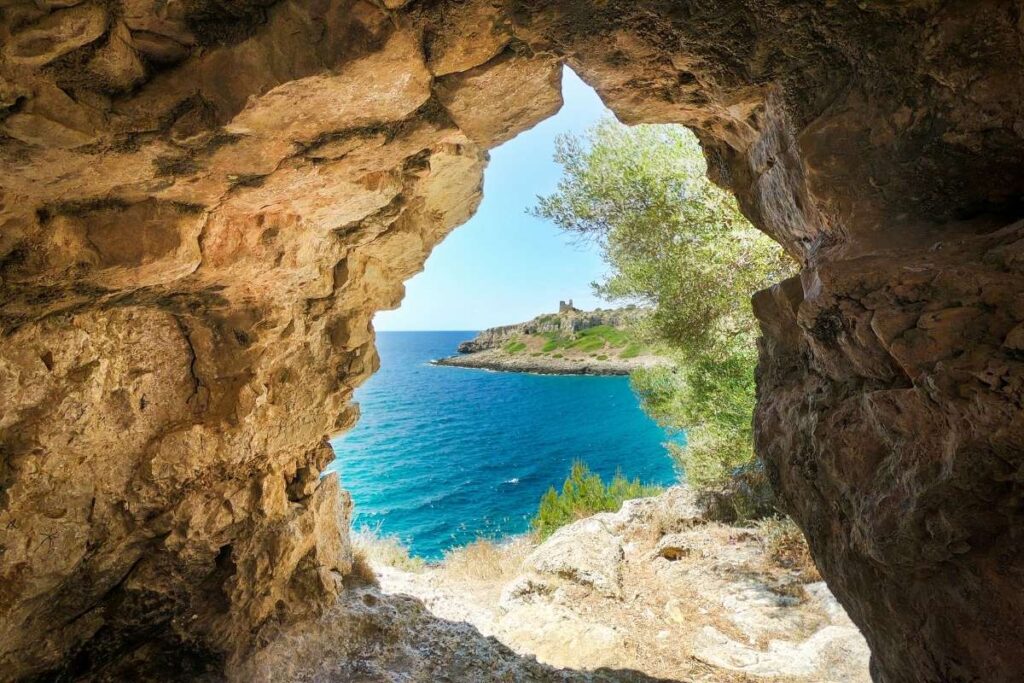
Like Zinzulusa, Porto Selvaggio is an absolute treasure trove for geological and archaeological enthusiasts. The cliffs are pockmarked with both above-ground and underwater caves.
Grotta del Cavallo (Horse’s Cave)
This cave is world-famous among archaeologists; excavations here revealed evidence of the earliest modern human (Homo sapiens) settlements in Europe, alongside Neanderthal remains dating back over 35,000 years.
Grotta delle Corvine
For divers, this massive submerged sea cave is renowned for its incredibly rich, colorful marine fauna and spectacular underwater topography.
You cannot drive into the park. Reaching the main pebble beach (Spiaggia della Sorgente) requires a 15-to-20-minute downhill walk (roughly 1 km) through the pine forest from the main parking zones. Porto Selvaggio is intentionally kept wild. There are picnic tables and occasional seasonal snack trucks near the trail entrances, but no beach bars or sunbed rentals. Pack your own water, lunch, and a trash bag to carry your waste out. Bring water shoes if you are considering a swim.
Ready for a more serious hiking experience?
Try the Cammino del Salento