Why are there so many castles in Puglia?
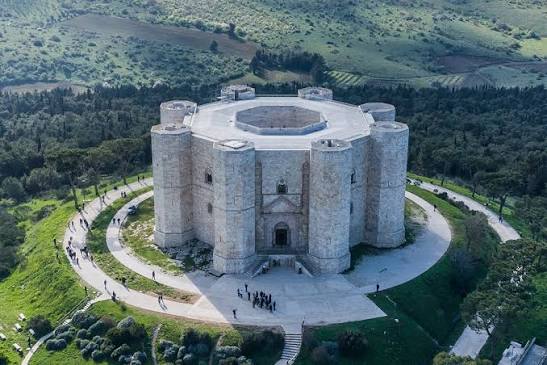
There are more than 100 castles and fortresses scattered throughout Puglia. This number includes everything from famous, well-preserved sites like Castel del Monte, a UNESCO World Heritage site, to smaller, lesser-known fortresses and watchtowers found in the countryside or along the coast. Many have been restored and are now museums, cultural centers, or even hotels. Puglia’s landscape is dotted with a remarkable number of fortress castles because of its long and turbulent history as a strategic crossroads.
1. Strategic Geographic Location: Puglia is the “heel of the boot,” almost entirely surrounded by the Adriatic and Ionian Seas. This unique position made it a crucial gateway for trade and military operations. It was a natural landing point for invading armies and a key departure point for crusaders, merchants, and conquerors heading east.
2. A History of Conquest and Rule: Puglia has been under the rule of numerous civilizations, each leaving its architectural and defensive mark. The region was a melting pot of cultures, and each ruling power needed to fortify their control against both foreign invaders and internal rebellions. This includes:
- The Messapians and Greeks: The earliest inhabitants, the Messapians, built fortified settlements, and the Greeks established important colonies like Taranto, a major city of Magna Graecia.
- The Romans: The Romans recognized the region’s importance, building the Via Appia to connect Rome to the port of Brindisi, a vital hub for trade and military expeditions to the East.
- The Byzantines: After the fall of the Roman Empire, Puglia was a battleground, often ruled by the Byzantines who built fortifications to defend against incursions from the Lombards and Saracens.
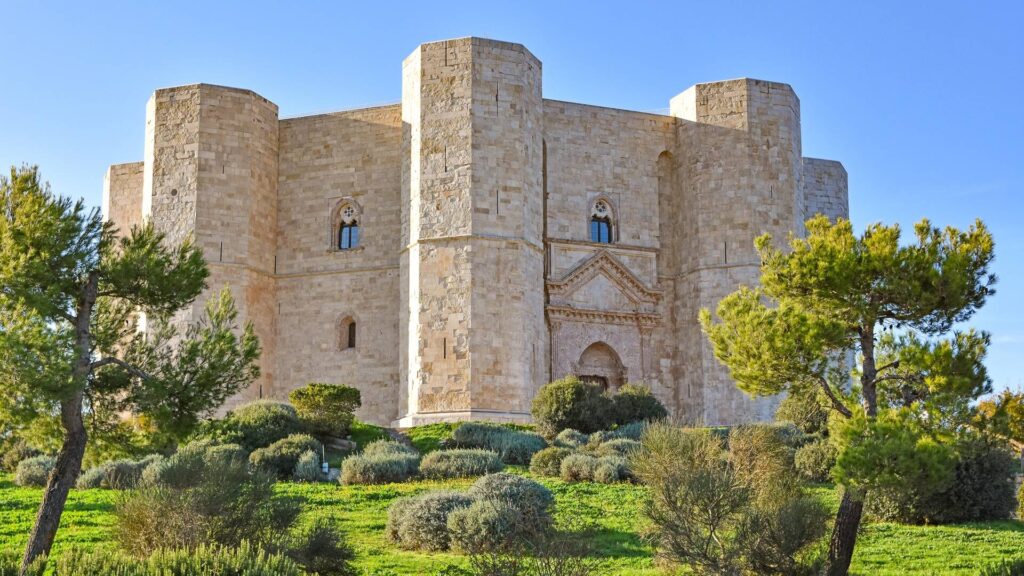
- The Normans and Swabians: The Normans conquered the region in the 11th century, and their rule, followed by the Swabian dynasty, was a golden age of castle construction. The most famous builder was Emperor Frederick II, who was nicknamed “Stupor Mundi” (Wonder of the World) and built or rebuilt more than 200 castles and fortifications throughout Southern Italy, many of which are in Puglia. His most iconic creation, Castel del Monte, is a UNESCO World Heritage site and a masterpiece of medieval architecture.
- The Angevins, Aragonese, and Spanish: Later rulers, including the Angevins and the Spanish Aragonese, continued to reinforce and build new castles to defend the coastline from repeated attacks, most notably from the Turks.
3. Defense Against Maritime Threats: The long, exposed coastline of Puglia was highly vulnerable to attack. For centuries, the region was raided by Saracen and Turkish pirates and fleets. This constant threat necessitated the construction of a comprehensive coastal defense system, with castles and watchtowers strategically placed to provide a network of protection. The Castle of Otranto, for example, was heavily fortified after a devastating Turkish attack in 1480.
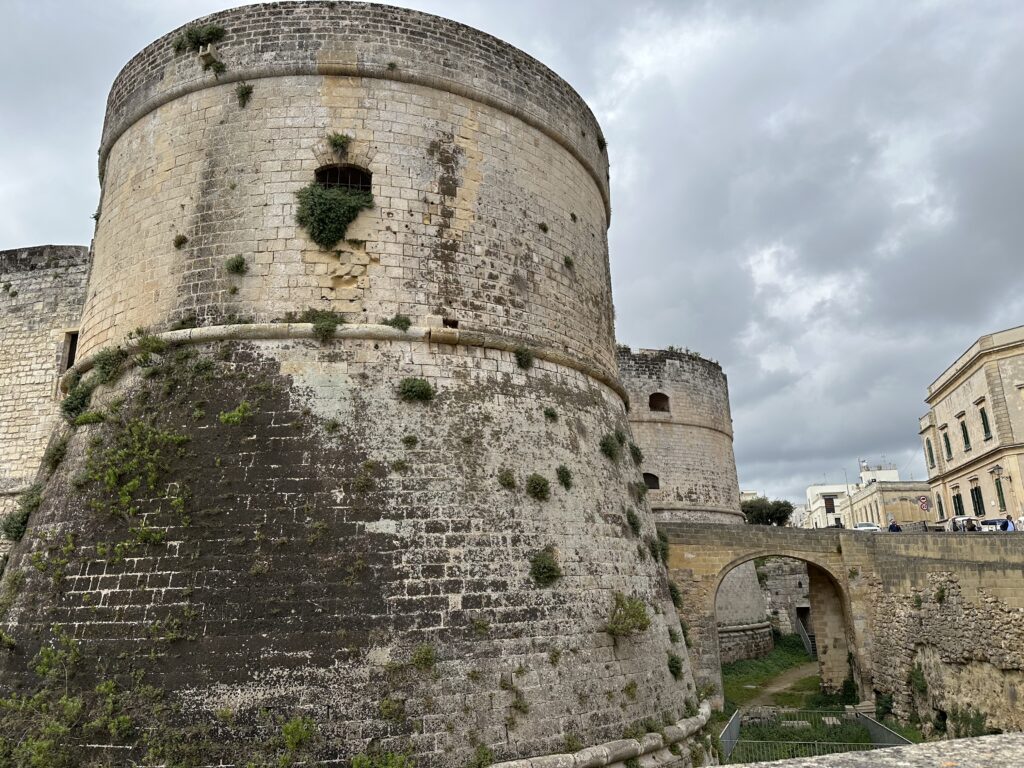
The fortress castles of Puglia are not just scattered landmarks; they are a physical timeline of the region’s past. Each one tells a story of a different ruler, a different threat, and a different chapter in the long and fascinating history of this strategically vital land.
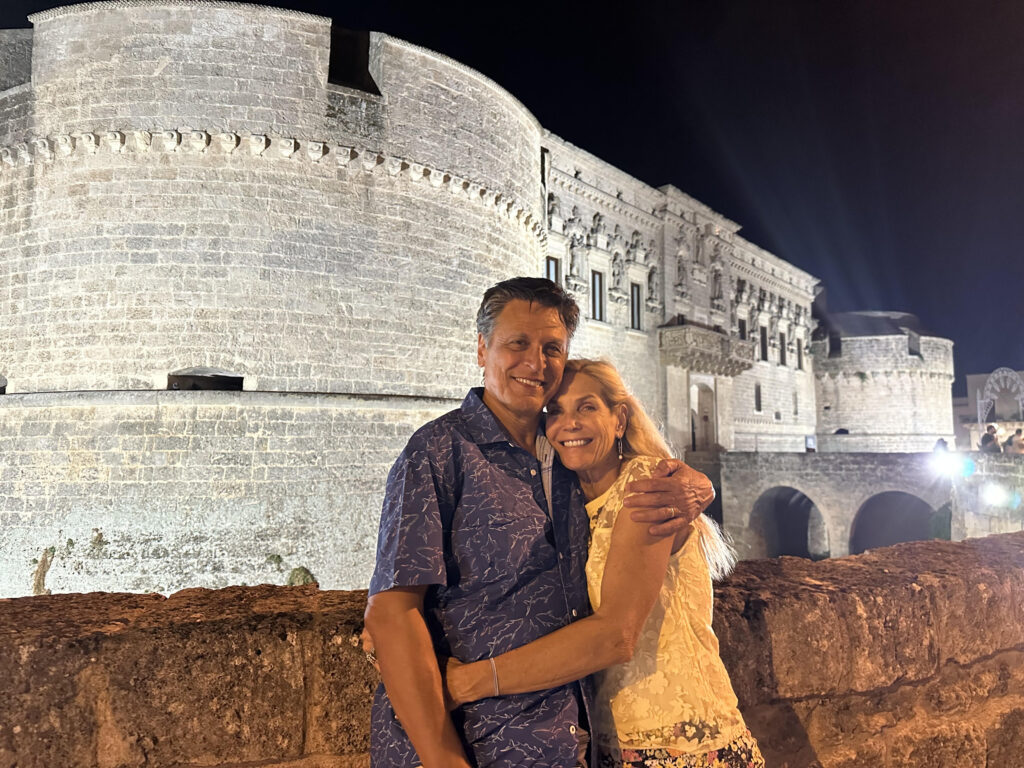
Castle in Corigliano d’ Otranto
What are some of the most visited Castles in Puglia?
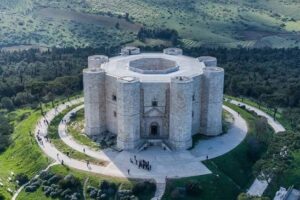
Castel del Monte (Andria): This is, without a doubt, the most famous and iconic castle in Puglia. It’s a UNESCO World Heritage site and a masterpiece of medieval architecture built by Emperor Frederick II in the 13th century. Its unique octagonal shape, with eight octagonal towers, has made it a subject of fascination and mystery for centuries. The castle’s purpose is still debated—some believe it was a hunting lodge, while others argue it was an astronomical observatory or a symbolic temple. Its architectural brilliance and the stunning panoramic views from its hilltop location make it an unmissable stop.
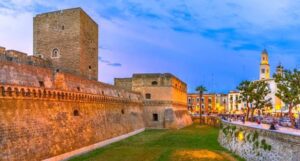
Castello Svevo (Swabian Castle) in Bari: Situated right on the edge of Bari’s old town, this imposing fortress has a rich history that dates back to the Normans and was later heavily modified by Frederick II. Surrounded by a moat, it has been a defensive stronghold, a noble residence, and even a prison. Today, it serves as a museum and a venue for cultural events, offering visitors a deep dive into the city’s past.
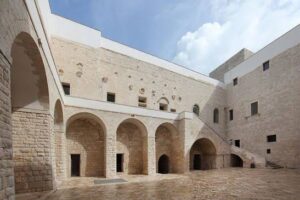
Castello Svevo (Swabian Castle) in Trani: This beautiful castle is famous for its picturesque setting right on the sea. Built by Frederick II, it’s known for its well-preserved quadrangular plan and its history as the site of a royal wedding. Its location and architecture make it a prime spot for photography, and it often hosts events and exhibitions.
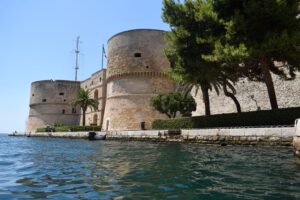
Castello Aragonese in Taranto: Also known as Castel Sant’Angelo, this massive fortress guards the entrance to Taranto’s old city and its ship canal. While its origins are Byzantine, the current structure is a product of Aragonese rule in the 15th century. It is currently managed by the Italian Navy, which offers free guided tours, providing a unique look into its history and strategic importance.
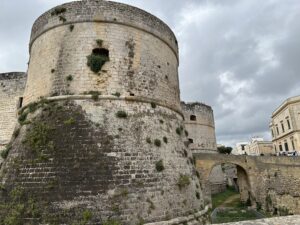
Castello di Otranto (Otranto): This castle is located in Italy’s easternmost town and played a crucial role in defending the coastline from Turkish attacks, particularly after the devastating 1480 invasion. Its history is steeped in tales of heroism and it is a key landmark for understanding the region’s coastal defense network. It now serves as a major venue for art exhibitions and cultural events.
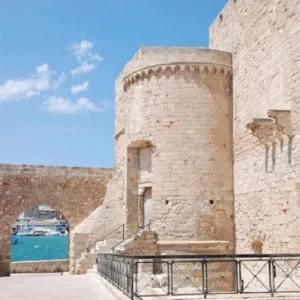 Castello Carlo V in Lecce: Situated in the heart of Lecce, this castle was built by Emperor Charles V in the 16th century on the remains of an earlier Norman fortress. While it may not look as “fortress-like” as others from the outside due to urban development, its interior reveals a fascinating history and hosts various exhibitions, making it a cultural hub within the city.
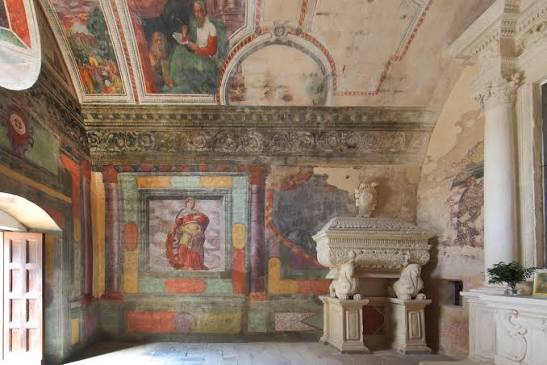
Castle interior- Copertino
Can I stay in a luxury castle in Puglia?
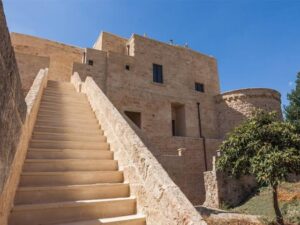
Castello di Ugento: This is a magnificent example of a medieval castle that has been lovingly restored and converted into a luxury hotel and cooking school. It offers an authentic historical setting with modern comforts, lush gardens, and a focus on high-end culinary experiences. Its elegant rooms and common areas combine ancient stonework with refined, contemporary design.
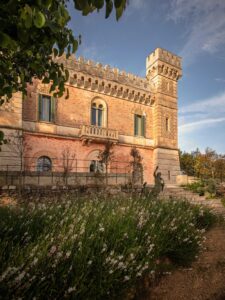 Castle Elvira: Located near Lecce, Castle Elvira is a beautifully restored late 19th-century fortress that was abandoned for over a century. It reopened as an exclusive, adults-only luxury boutique hotel. Its “fanciness” lies in its stylish interiors that blend restored original features with eclectic art, designer furnishings, and state-of-the-art technology. It’s a place where history meets modern glamour, complete with a private cinema and multiple swimming pools.
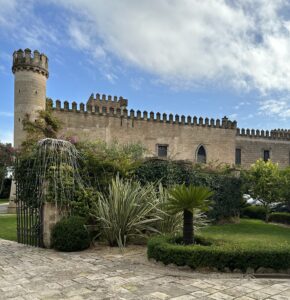 Castello Monaci: Located in Salice Salentino, this castle is also a winery. Surrounded by vineyards and olive groves, it is renowned for its wines and as a wedding and event destination. The castle was built in the 16th century on medieval foundations and was once a place of worship and refuge for Basilian monks. This is where the name “Monaci,” meaning “monks” in Italian, originates.
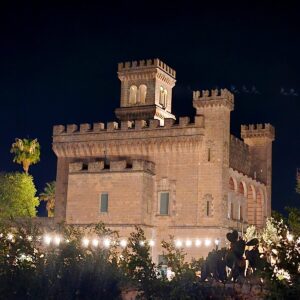
Vinilia Wine Resort: While not a true medieval castle, this early 20th-century manor house in Manduria was built to resemble a small medieval castle. It has been converted into a luxury resort with a focus on wine. Vinilia was established through careful renovation of an ancient mansion dating back to the early ‘900, built on behalf of the aristocratic family Schiavone of Manduria, with origins between Rome and Manduria. The Roman designer of that building was inspired, in construction, to a neo-eclectic style.
Watch Towers in Puglia
Puglia’s coastline is dotted with a vast network of hundreds of watchtowers, a testament to its long and tumultuous history. This system, also known as the “coastal towers” or “Saracen towers,” was a crucial part of the region’s defense against invaders from the sea.
The primary purpose of the watchtower system was to protect the Puglian coast from frequent raids by pirates, particularly the Saracens and the Ottoman Turks. These raids, which intensified from the 15th to the 17th centuries, were devastating, resulting in the sacking of towns, the enslavement of local populations, and the disruption of trade.
In response, the Spanish rulers of the Kingdom of Naples, especially Emperor Charles V, ordered the construction of a comprehensive coastal defense network in the mid-16th century. The system was designed to provide an early warning of an approaching enemy fleet, allowing the local population to either prepare to fight or flee to safety in fortified inland towns and castles.
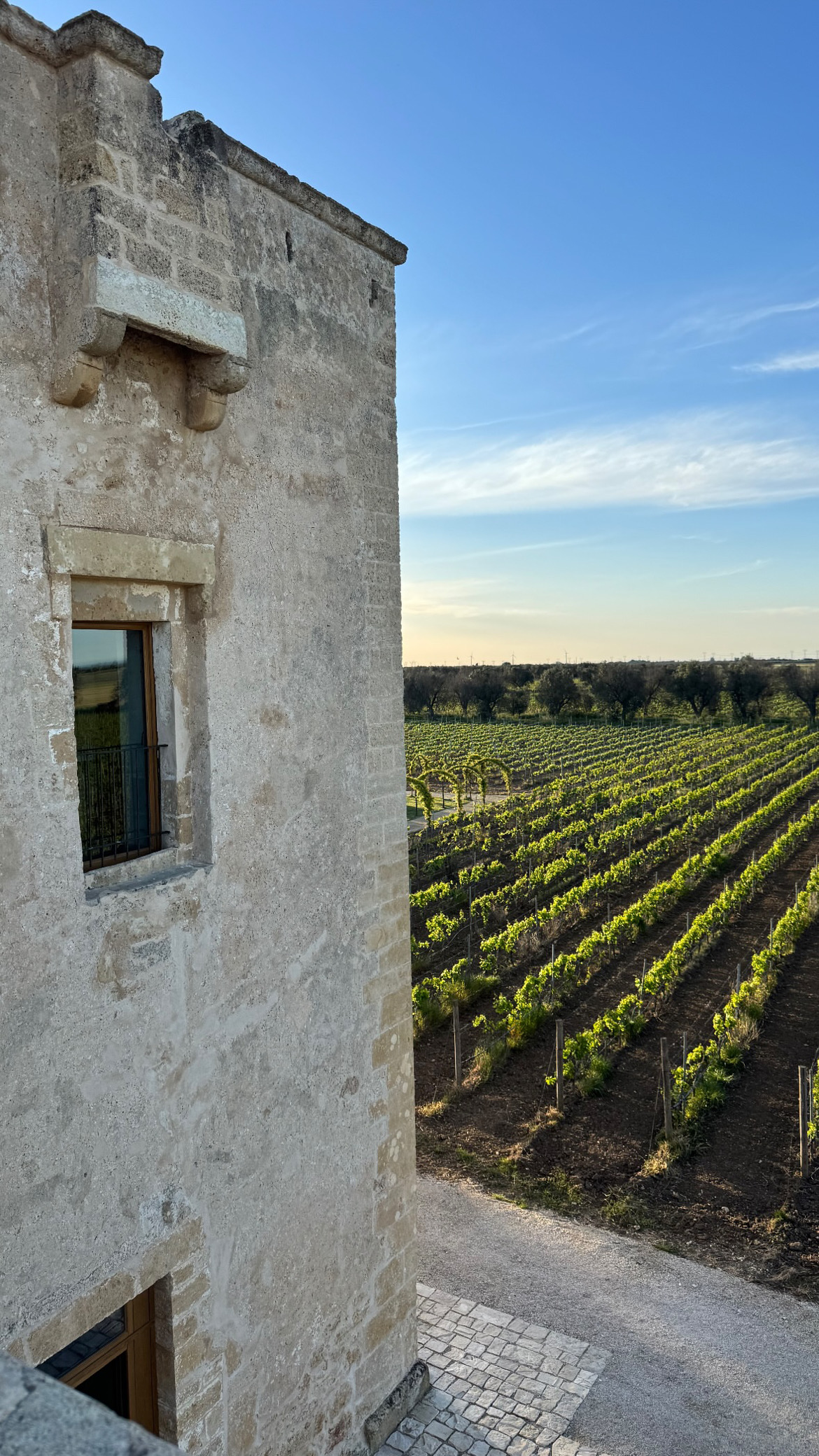
An ancient Watch tower on the property of Torleanzi Winery
How the System of Puglia Watch Towers Worked
The towers were strategically placed along the coastline, typically on promontories or elevated positions, and were built close enough to each other that they were in visual contact. The communication system was simple but highly effective:
- Daytime: Watchmen on the towers would spot approaching ships and light a fire, creating a column of smoke. The number of smoke puffs could even be used to indicate the number of ships sighted.
- Nighttime: A bright fire was lit on the tower’s roof.
This signal would be passed from one tower to the next, creating a chain reaction that could alert the entire coast, as well as inland fortresses and villages, in a matter of minutes. Each tower was typically manned by a small military team that also had the ability to fire a cannon or an arquebus to send an acoustic alarm.
Architectural Features of Watch Towers
The watchtowers were built with defense in mind. They were generally:
- Quadrangular or Circular: The most common shapes were square or circular, with thick stone walls (often up to 2 meters thick at the base).
- Raised Entrance: The entrance was usually located on the upper floor, accessible only by a retractable wooden ladder or rope, making it nearly impossible for attackers to enter.
- Two-Story Design: The ground floor was typically used for storing food and ammunition, while the upper floor served as living quarters for the guards.
Notable Watch Tower Examples in Puglia
Many of these towers have survived, either in a state of ruin or meticulously restored. They are now iconic landmarks of the Puglian landscape. Some of the most notable include:
- Torre dell’Orso (Melendugno): A well-known watchtower located on the Adriatic coast.
- Torre Pali (Salento): A unique tower built in the sea, now completely surrounded by water due to coastal erosion.
- Torre Colimena (Salento): An imposing, well-preserved tower on the Ionian coast that guards a nature reserve.
- Torre Lapillo and Torre Cesarea (Porto Cesareo): Part of a series of four major watchtowers in the area, some of which have been converted into museums or cultural centers.
- Torre Guaceto (Brindisi): Located within a protected nature reserve, this tower is a significant landmark.
Today, the watchtowers serve as a powerful reminder of Puglia’s past and offer visitors a chance to explore a unique piece of military and cultural history while enjoying some of the region’s most beautiful coastal views.
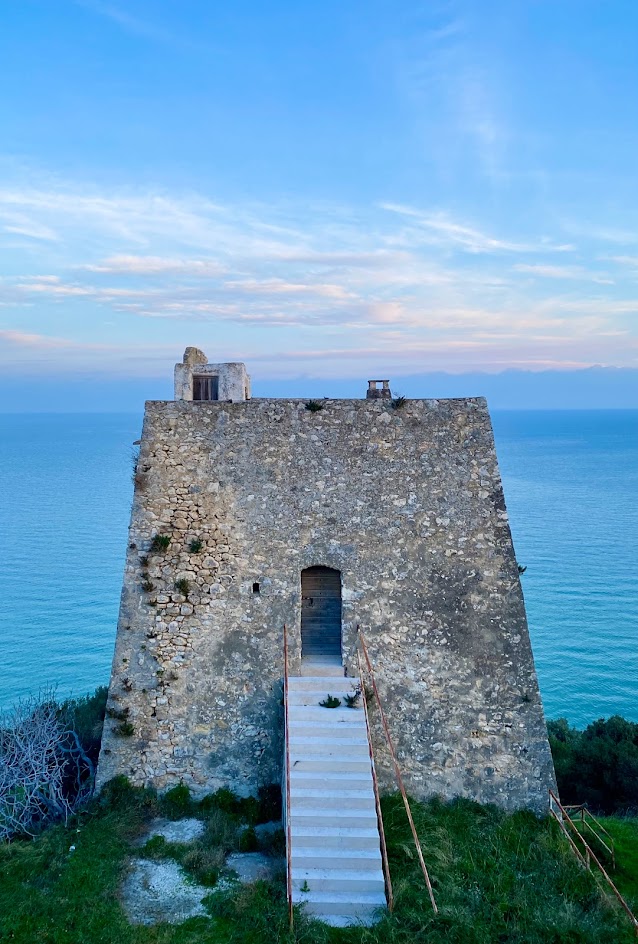
Watch Tower Gargano
FAQs Castles of Puglia
Why is Castel del Monte octagonal?
Nobody knows for certain — and that’s the fascination. Frederick II’s 13th-century masterpiece is an octagon with eight octagonal towers, and scholars have read everything into the number eight: the eighth day of Resurrection, the eight-pointed star, a crown, an astronomical instrument aligned to the solstices. Theories range from hunting lodge to temple of knowledge. The mystery is the monument: UNESCO lists it precisely because no one can fully explain it.
Which famous Gothic novel was inspired by a Puglian castle?
Horace Walpole’s “The Castle of Otranto” (1764) — the book that invented the Gothic novel. Walpole claimed the story came to him in a dream about a giant helmet crushing a castle courtyard, and he set it in Otranto, whose Aragonese fortress he’d read about. Every haunted castle in literature descends from this one. Visit the real Castello Aragonese in Otranto and you can stand where the genre was born.
Do I need to book castle tickets in advance?
For Castel del Monte, yes in spring and summer — timed entry slots sell out, especially on weekends. The city castles (Bari, Lecce, Otranto) rarely require advance booking and many host free exhibitions. Taranto’s Aragonese castle is visitable only through the Italian Navy’s free guided tours, which run at set times — check the schedule before you go.
Can you get married in a Puglian castle?
Absolutely — it’s a thriving business. Castello Monaci in Salice Salentino pairs 16th-century walls with its own winery for vineyard weddings; Castello di Ugento offers full buyouts with its cooking school catering the feast. Smaller fortresses and masserie-turned-venues across Salento host ceremonies too. Book 12–18 months out for peak season (May–September).
Are any Puglian castles said to be haunted?
Otranto’s castle carries the weight of the 1480 siege — 800 townspeople were martyred, and their bones fill the cathedral’s chapel, so the town’s ghost lore runs deep. Castel del Monte attracts the esoteric crowd, who swear the octagonal geometry channels strange energies at the solstices. Whether you believe it or not, a night tour of any of these fortresses delivers atmosphere by the stone-load.
What happened during the 1480 Turkish siege of Otranto?
An Ottoman fleet of around 150 ships landed and besieged the city; after it fell, some 800 surviving men were executed on the Hill of Minerva for refusing to convert to Islam — the Martyrs of Otranto, canonized in 2013. Their skulls are displayed in Otranto Cathedral. The trauma reshaped Puglia’s entire coastal defense system: the watchtower network and the refortification of castles like Otranto’s were the direct response.
Can you walk between the coastal watchtowers?
In stretches, yes. The 16th-century towers were built within sight of each other, and several coastal paths — particularly around Otranto, Santa Maria di Leuca, and the Porto Selvaggio park — link tower to tower along cliffs and coves. It’s some of the best hiking in Puglia: sea views, swimming coves, and a 500-year-old early-warning system as your trail markers. Bring water and sun protection; shade is scarce.