
Monopoli, a charming coastal town in Puglia, Italy, offers a delightful blend of history, culture, and natural beauty. Its name, derived from the Greek “monos polis” (unique city), truly reflects its distinctive character.
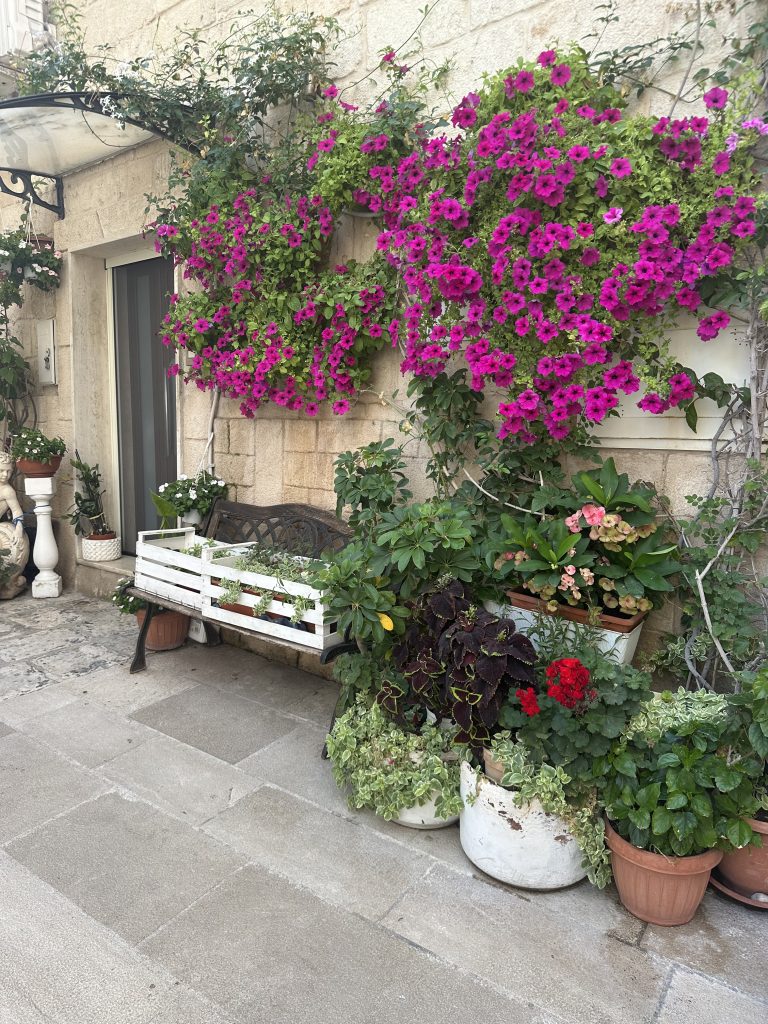
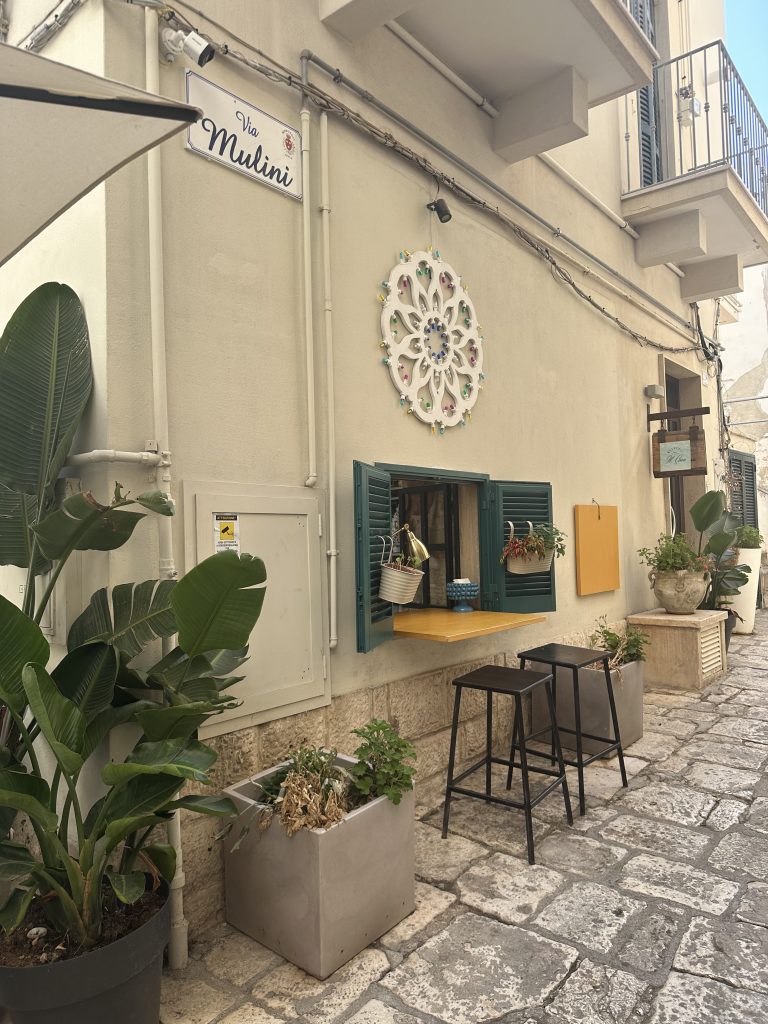
Enjoy he Enchanting Old Town (Centro Storico) with whitewashed alleys and baroque details. Monopoli’s historic center is a labyrinth of narrow, winding streets, characterized by stunning whitewashed buildings that glow in the Puglian sun. These are often adorned with vibrant flowers and quaint balconies. Interspersed with this classic Mediterranean aesthetic are elegant Baroque architectural details, particularly on churches and noble palaces. As you wander, you’ll stumble upon charming, intimate piazzas (squares) and discover hidden churches seemingly piled on top of each other.
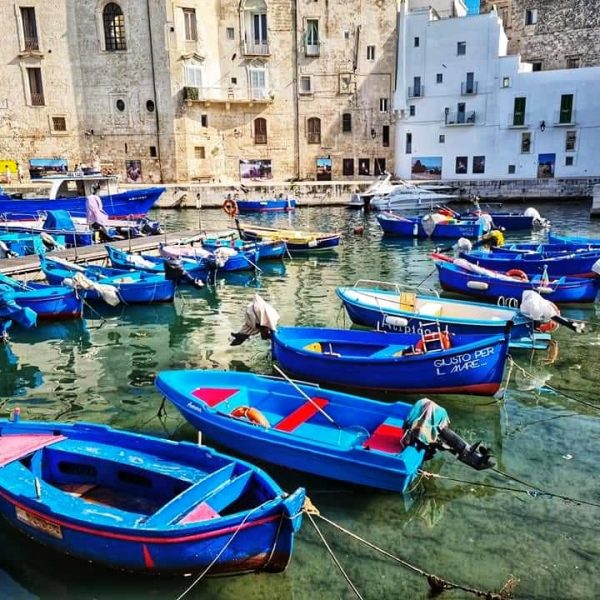
Unlike some overly touristy destinations, Monopoli’s old town still feels authentically lived in. Locals go about their daily lives, giving it a refreshing, non-touristy vibe with local shops, bakeries, and gelaterias. You’ll see traditional wooden fishing boats called “gozzi”, typically painted in vibrant red and blue, bobbing in the clear waters, and fishermen mending their nets.
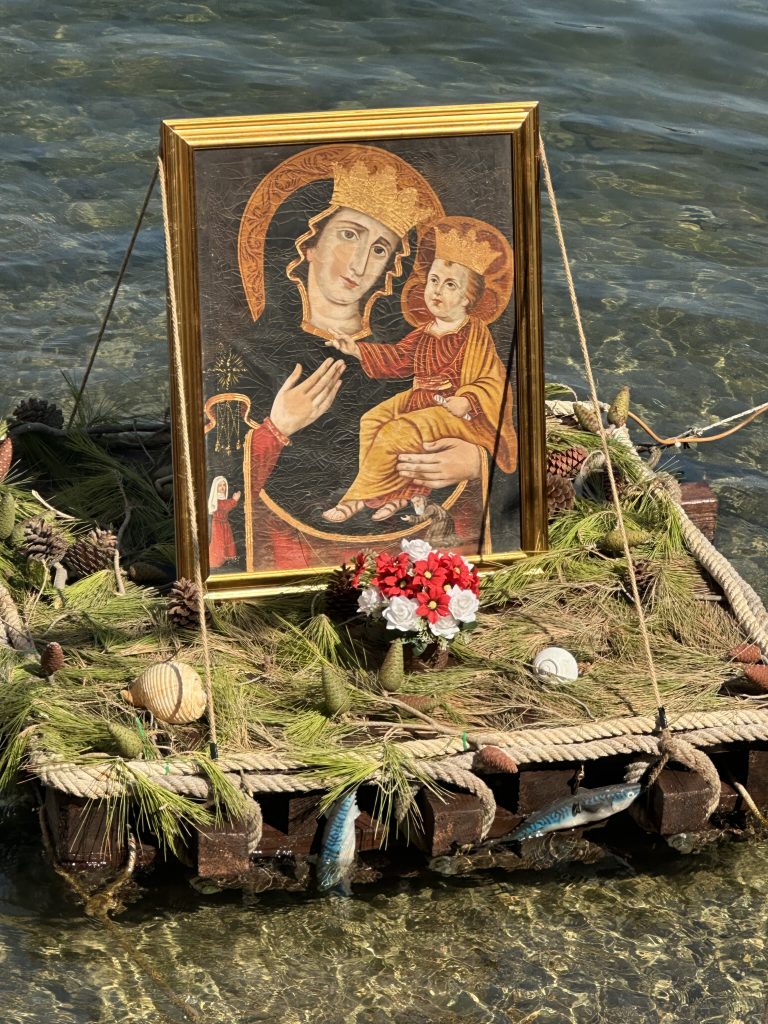
This ancient port was crucial to Monopoli’s prosperity through the centuries, making it an important trading hub and a defensive stronghold. It’s even tied to a local legend of a miraculous icon arriving on a raft.
Check out these sites
The Cathedral Basilica Maria Santissima della Madia
- Baroque Splendor: This grand cathedral is a must-see. While its origins date back to the 12th century, the current structure is a magnificent 18th-century Baroque masterpiece.
- Legend of the Madonna della Madia: The cathedral is dedicated to the Madonna della Madia, the city’s patron saint. Legend has it that her icon miraculously arrived in the harbor on a wooden raft, an event still celebrated annually with a suggestive procession in December.
- Stunning Interior: The interior is mind-blowing, with lavish frescoes, intricate marble work, and a sense of solemn grandeur. The icon of the Madonna on the raft is a revered relic within.
- Diocesan Museum and Crypt: Attached to the cathedral is the Diocesan Museum and an archaeological crypt, offering further insights into the city’s religious history and ancient past.
Chiesa di Santa Maria del Suffragio (Purgatory church)
Via Argento, 470043, 70043 Monopoli BA, Italy
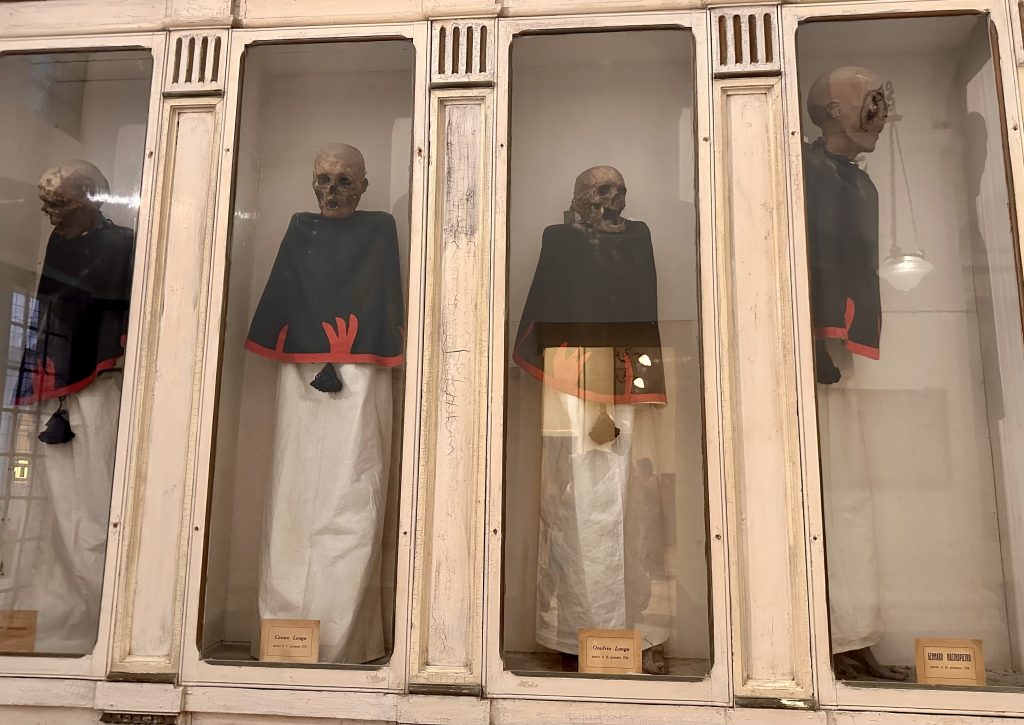
The Confraternity of the Intercession for the Souls of Purgatory had formed and set up offices in the Cathedral. On September 20, 1686, the Cathedral’s bell tower collapsed killing 40 people. The confraternity bought the land and built a church in memory of those who perished. Construction was started in 1687 and completed in 1700. This church may be best known for macabre symbols of death and actual mummies of church elders wearing capes with purgatory flames.
Castello di Carlo V (Charles V Castle)
- Seaside Fortress: Perched on a promontory overlooking the Adriatic, this imposing 16th-century fortress was built by Emperor Charles V to defend against pirate attacks and invasions.
- Panoramic Views: Explore its sturdy walls and towers, and enjoy breathtaking panoramic views over the old port and the sparkling sea. Today, it also hosts cultural events and art exhibitions.
Beautiful Beaches and Coastal Scenery
- Crystal-Clear Waters: Monopoli’s coastline boasts numerous small, idyllic sandy coves and rocky stretches with crystal-clear, inviting waters.
- Cala Porta Vecchia: A popular and easily accessible small beach located right below the old town walls, perfect for a refreshing dip after exploring.
- Lungomare Promenade: Take a leisurely stroll along the scenic Lungomare Santa Maria promenade, offering stunning views of the coastline, historic buildings, and the vibrant sea.
Rich and Layered History
- “City of a Hundred Lands”: Monopoli is also known as the “city of a hundred lands” due to its numerous rural districts (contrade) dotted with fortified farms, country houses, and stone churches, showcasing a rich agricultural heritage.
- Ancient Origins: Its history dates back to ancient Messapian settlements around 500 BC, followed by Roman, Byzantine, Norman, and Venetian influences, all of which left their mark on the town’s architecture and culture. You can even find remnants of the ancient Roman Via Traiana.
Delicious Apulian Cuisine
- Fresh Seafood: Being a coastal town, Monopoli excels in fresh seafood dishes.
- Local Specialties: Indulge in traditional Apulian delights like orecchiette pasta with various sauces, focaccia barese, panzerotti, and local wines (Primitivo, Negroamaro).
- Lively Culinary Scene: The old town is teeming with excellent restaurants, traditional taverns, and trendy bars where you can savor these flavors.
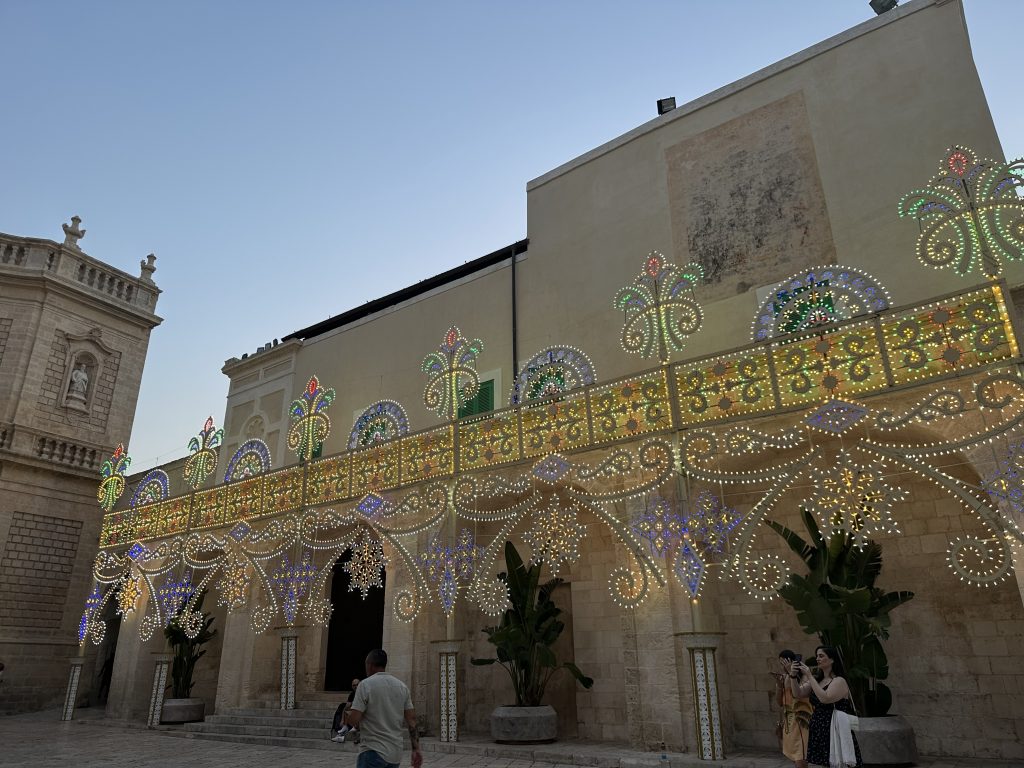
Monopoli offers a unique and authentic Puglian experience, blending its historical past with a vibrant present. It’s less crowded than some of its more famous neighbors, allowing for a more intimate and relaxed exploration of its charms.
FAQs for Monopoli
1. What does Monopoli mean?
"Unique city" — from the Greek "monos polis." And it lives up to the name: a whitewashed old town, a working fishing port, and Baroque churches all wrapped into one romantic coastal gem
2. What is the legend of the Madonna della Madia?
Monopoli's patron saint arrived by miracle — her icon floated into the harbor on a wooden raft. The grand Cathedral Basilica Maria Santissima della Madia is dedicated to her, and the miraculous arrival is still celebrated every December with a moving procession.
3. What is the Purgatory church in Monopoli?
The Chiesa di Santa Maria del Suffragio, built between 1687 and 1700 after the cathedral's bell tower collapsed in 1686, killing 40 people. It's famous for its macabre symbols of death — and the actual mummified remains of church elders, dressed in capes with purgatory flames.
4. What is the Castello di Carlo V?
A commanding 16th-century seaside fortress built by Emperor Charles V to defend against pirate attacks. Walk its sturdy walls for breathtaking panoramic views over the old port and the Adriatic — and check what's on, since it regularly hosts cultural events and art exhibitions.
5. What are the best beaches in Monopoli?
Cala Porta Vecchia, right below the old town walls — perfect for a refreshing dip after sightseeing. Beyond that, the coastline is dotted with small sandy coves and rocky stretches of crystal-clear water. Don't miss a sunset stroll along the Lungomare Santa Maria promenade.
6. What food is Monopoli known for?
Fresh seafood straight off the colorful gozzi fishing boats, plus Apulian classics: orecchiette pasta, focaccia barese, and panzerotti — all washed down with local Primitivo and Negroamaro wines. The old town is packed with excellent restaurants, taverns, and bars
7. Why is Monopoli called the "city of a hundred lands"?
Because of its many rural districts (contrade), dotted with fortified farms, country houses, and stone churches — a testament to Monopoli's rich agricultural heritage beyond the port.
8. Is Monopoli less crowded than Polignano a Mare?
Yes — and that's its charm. Monopoli's old town still feels authentically lived-in, with locals going about their daily lives among the bakeries, gelaterias, and fishermen mending their nets. You'll get the beauty without the crush
Great Cities near Monopoli