The Mini Camino of Salento
Walking from Lecce to the ‘End of the World’
Everyone knows the Camino de Santiago. Fewer people know that the heel of Italy has its own mini camino — the Cammino del Salento, a pilgrims’ walk from Lecce to Santa Maria di Leuca, where Italy ends and the two seas meet. It’s short enough to walk in a week, beautiful enough to remember for a lifetime, and still wonderfully uncrowded.
Why walk the mini camino?
Because it’s beautiful Salento at walking pace — which is the speed it deserves. You’ll cross olive groves and dry-stone walls, sleep in small borghi or Italian villa, and eat like a local every single night. The stages are manageable (mostly 20–26 km), the terrain is gentle, and every day ends near the sea or in a village with a story.
It’s also achievable. You don’t need to be an athlete or take a month off work. One week, a pair of broken-in walking shoes, and a pilgrim passport — that’s the whole requirement.
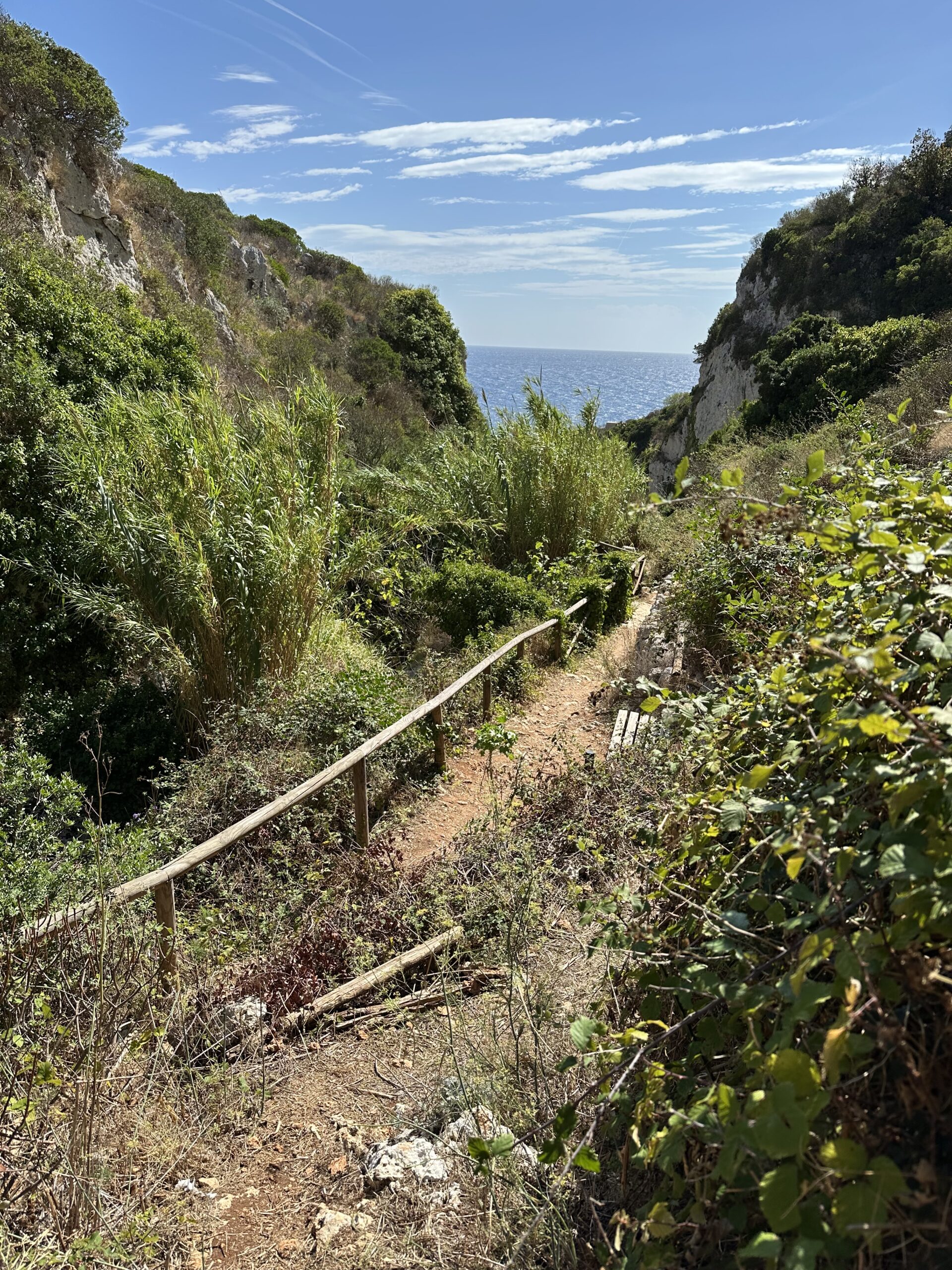
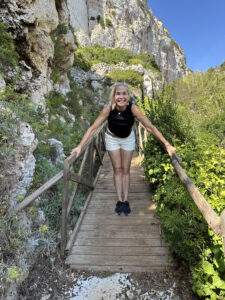
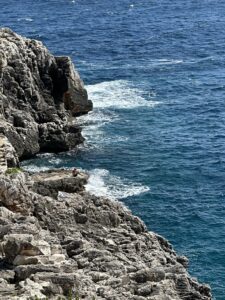
Sentiero delle Cipolliane cliff path on the Cammino del Salento
A land shaped by faith
This isn’t just a pretty walk — it’s an ancient pilgrimage. For centuries, Santa Maria di Leuca was the last piece of land before pilgrims boarded ships for the Holy Land, and the walk ends at the Santuario De Finibus Terrae — literally, the Sanctuary of the End of the Land — built over a Roman temple to Minerva. Tradition says St. Peter himself landed here, bringing Christianity to Italy.
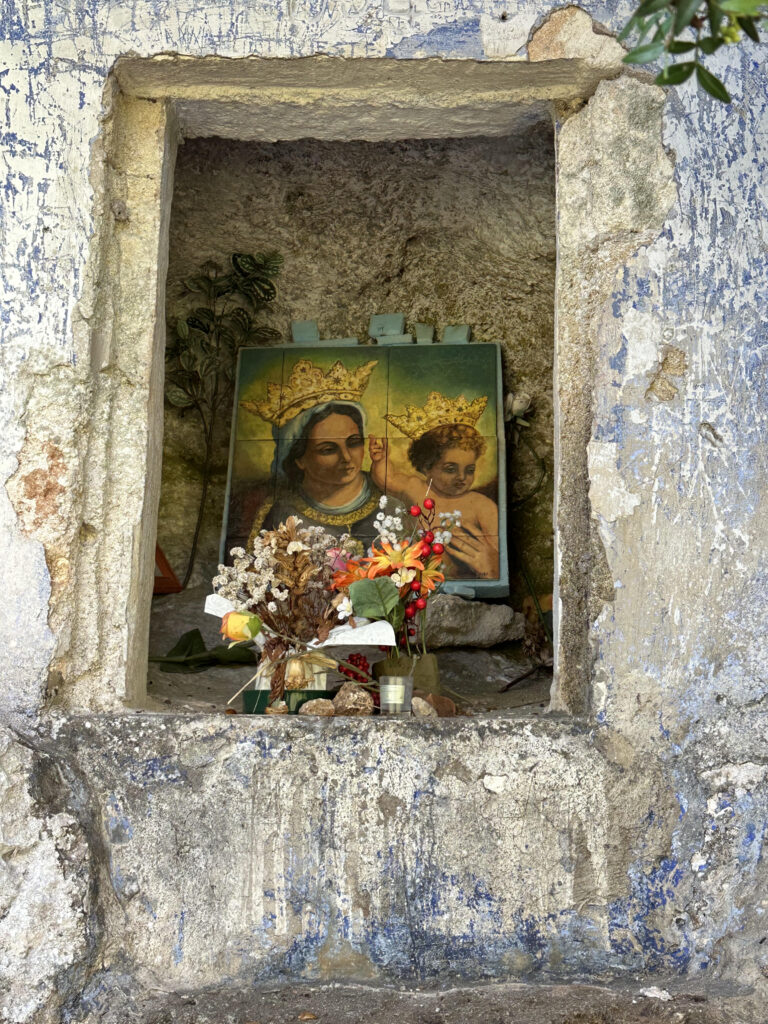
The whole peninsula is layered with sacred sites: Otranto’s cathedral with its extraordinary 12th-century floor mosaic, the Marian sanctuary of Montevergine (born of an apparition to a shepherd boy), rock crypts and menhirs around Giurdignano, and countless small chapels in the Grecìa Salentina villages. Walking here, you feel the centuries under your feet.
(One clarification: the Via Francigena del Sud also runs from Lecce to Leuca, but it’s a different route with its own signage and credential — via Martano and the inland road. The Cammino del Salento is its own thing, with two variants described below.)
The two routes
Both start at Porta Napoli in Lecce and finish at the Santuario De Finibus Terrae in Santa Maria di Leuca. In Piazza Sant’Oronzo they split — left toward the castle for the sea route, right toward Porta San Biagio for the villages.
Via del Mare — the coastal route (114 km, 5 stages)
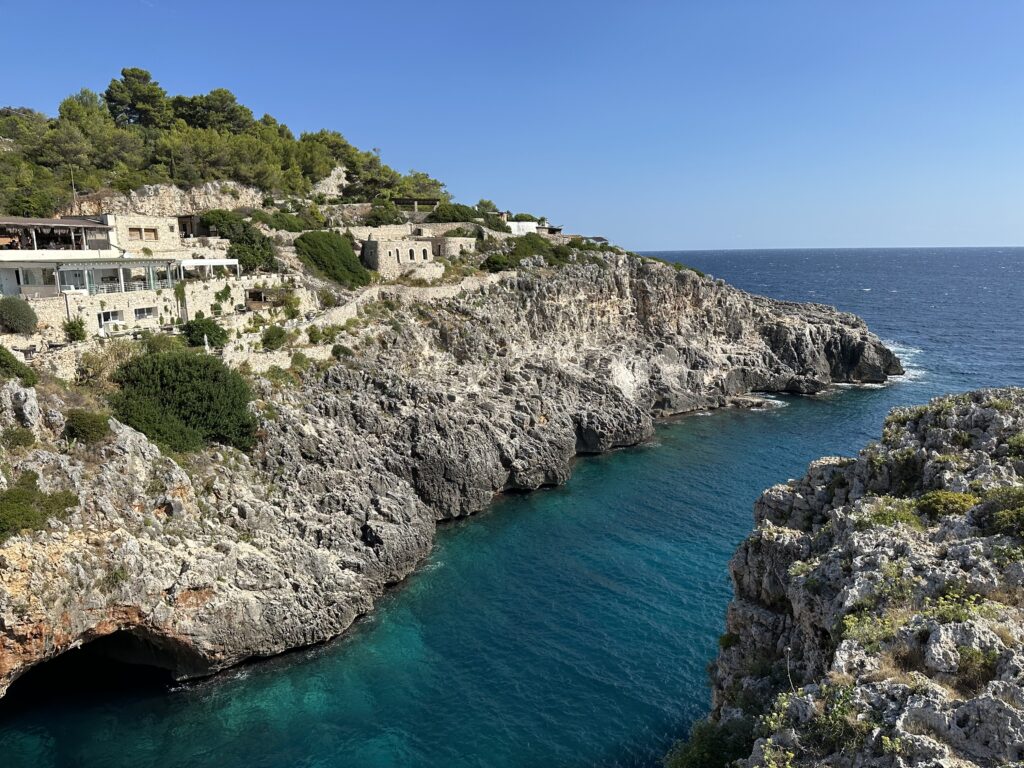
The sea is your companion almost the entire way: cliffs, hidden coves, watchtowers, and fishing villages.
Stage 1: Lecce → San Foca. Out through the hamlet of Merine and fortified Acaya, then the Le Cesine nature reserve and your first swim-worthy coastline. (My Lecce guide) Stage 1 Map
Stage 2: San Foca → Otranto. Roca Vecchia, Torre dell’Orso, the Faraglioni di Sant’Andrea sea stacks, and the Grotta della Poesia — then into Otranto, one of Italy’s most beautiful borghi. (My Otranto guide ) Stage 2 Map
Stage 3: Otranto → Santa Cesarea Terme.** Past Faro Palascìa, the easternmost point of Italy, the red-earth Cava di Bauxite quarry, and Porto Badisco Stage 3 Map
Stage 4: Santa Cesarea Terme → Marina Serra.** Through Castro with its cliff-top old town and the Grotta Zinzulusa sea cave, Cala dell’Acquaviva, and Tricase Porto. (My Castro guide) Stage 4 Map
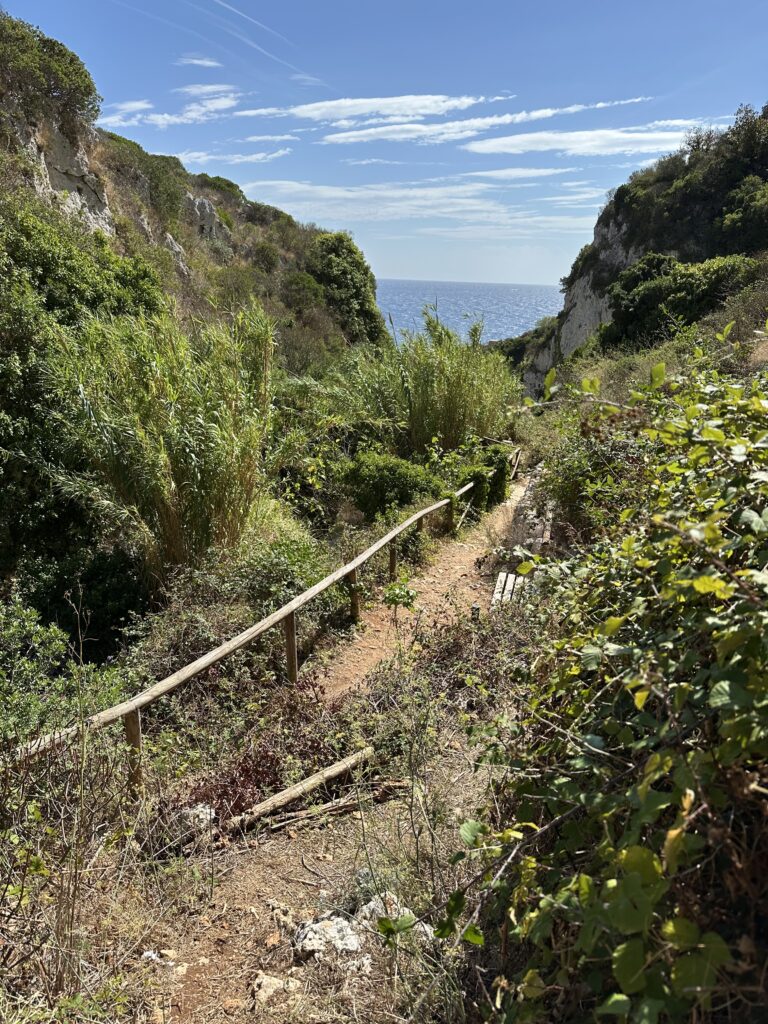
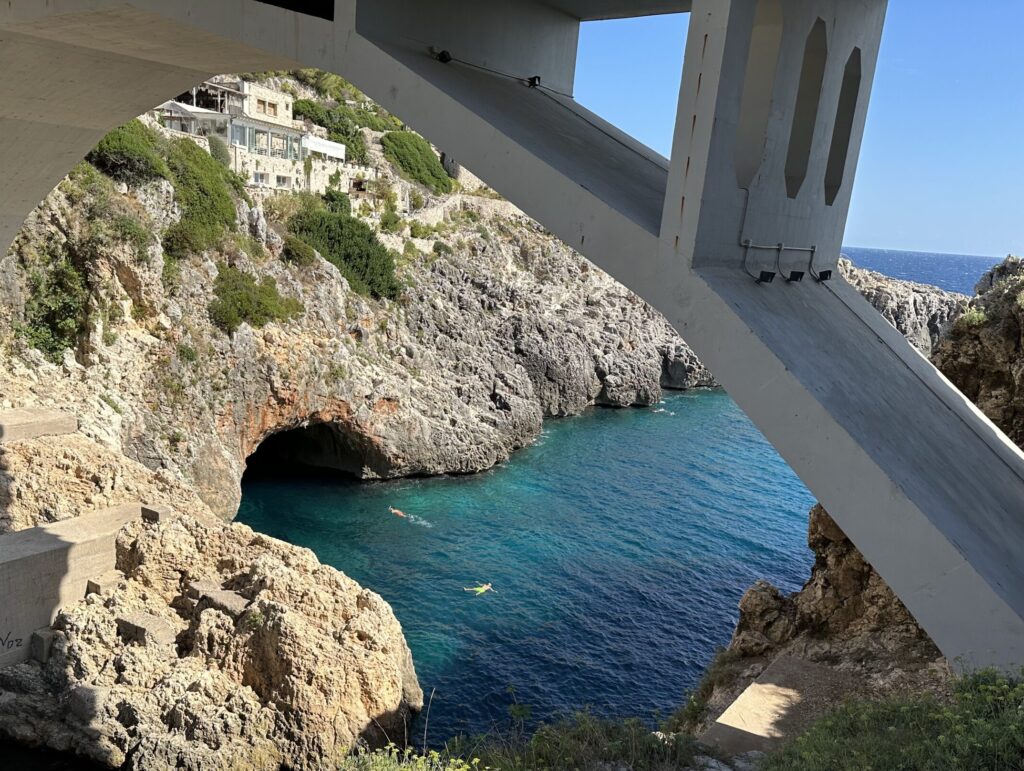
Stage 5: Marina Serra → Santa Maria di Leuca. The wildest, most beautiful stage: the Sentiero delle Cipolliane cliff path, Ponte Ciolo and its fjord-like inlet, Gagliano del Capo — then the final climb to the lighthouse and the sanctuary where the two seas meet. (My Santa Maria di Leuca guide) Stage 5 Map
Via dei Borghi — the villages route (135 km, 6 stages) — my pick
If the Via del Mare is about the sea, the Via dei Borghi is about the soul of the Salento: inland villages, Griko culture, baroque churches, and the kind of food you only get where tourists don’t go.
Stage 1: Lecce → Sternatia. Into the Grecìa Salentina, where a Greek dialect (Griko) is still spoken.
Stage 2: Sternatia → Corigliano d’Otranto. Castles, courtyards, and village life. (My Corigliano guide)
Stage 3: Corigliano d’Otranto → Otranto. Via Melpignano (Augustinian church and convent), Cursi (pietra leccese quarries and an underground olive mill), the Montevergine sanctuary, and Giurdignano — the megalithic garden of Italy, with menhirs and rock crypts — before reaching the sea at Otranto. (My Otranto guide )
Stages 4–6: Otranto → Santa Cesarea Terme → Marina Serra → Santa Maria di Leuca.** The route rejoins the coast for the spectacular final stages (same as the Via del Mare above).(My Leuca guide)
**Important:** the Via dei Borghi is temporarily closed while the route is being re-mapped — check the official site (camminodelsalento.it) for the current status before planning around it.
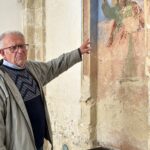 Why Via dei Borghi? The villages are where the Salento keeps its deepest traditions — the pizzica, the Griko language, the masserie kitchens. Great towns like, Galatina, home to the Basilica di Santa Caterina d’Alessandria with its breathtaking 14th-century frescoes and the historic Pozzo di San Paolo. The home of Tarantism, and the Pasticciotto- Mama Mia! (My Galatina guide)
We host walkers- check out our luxurious places to pause on Pugliaperfect.com
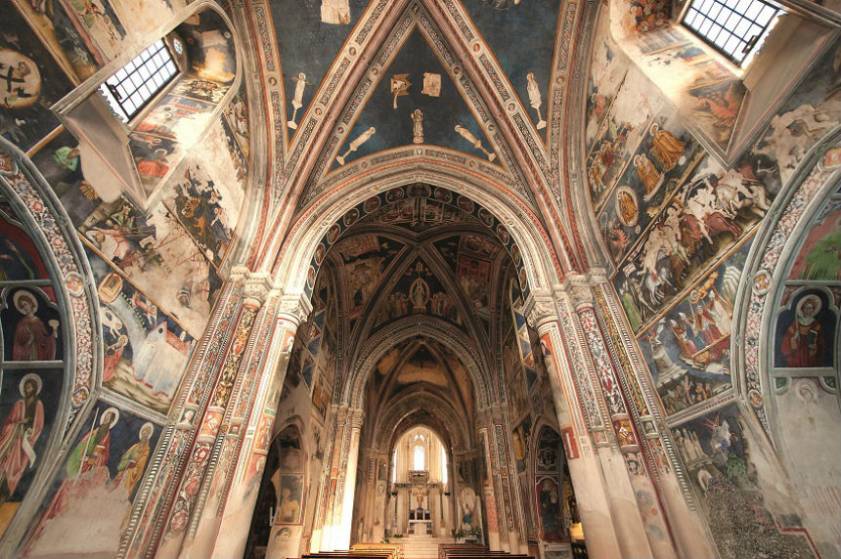
Basilica of Santa Caterina, Galatina
Can’t choose which Camino route?
Walk down on the Via del Mare and return on the Via dei Borghi (or vice versa) — about two weeks total, coast one way and villages the other. It’s the complete Salento.
The pilgrim passport and stamps
Like the great cammini, this one has its own credenziale — the Passaporto del Pellegrino (about €15 from the association). You collect a stamp in every village you pass, plus discounts at participating places to stay. Finish at the Santuario De Finibus Terrae in Leuca and you receive the Testimonium — your certificate of completion. Get the passport before you go; it’s part of the ritual.
How much time, when to go, how hard is it?
Via del Mare: 5 walking days — plan 6–7 days with a rest day
Via dei Borghi: 6 walking days — plan 7–8 days.
Both combined: about two weeks.
Difficulty: easy to moderate. Stages run 20–26 km (4–7 hours), with modest climbs. No technical terrain.
When: spring (April–June) and autumn (September–October) are ideal — wildflowers or harvest season, warm seas, no crowds. Winter walking is possible; Salento is mild. Avoid high summer: it’s hot, and the coast belongs to beachgoers.
More information and tour providers
Cammino del Salento (the official association)
The people who created the route. Three ways to walk: in a small organized group with a local guide and luggage transferred between stages; self-guided but fully organized by them (they book everything); or DIY with just the Pilgrim Passport. Insurance and 24/7 support included, luggage transfer on request. This is the one I’d start with.
A self-guided walking package: 8 days / 7 nights, about 96 km, with a navigation app (GPX tracks preloaded), luggage moved between your accommodations, and phone assistance. Around €1,050–1,195 per person in a double room depending on season (minimum 2 participants).
FAQs on the Cammino del Salento
Why do people say you walk in the Apostles’ footsteps on the Cammino del Salento?
Tradition holds that St. Peter himself landed at Santa Maria di Leuca on his way to Rome, found a pagan temple to Minerva on the promontory, and converted it to Christianity — dedicating the place to the Virgin Mary. Walking the ancient roads toward Leuca, today’s pilgrims retrace the journeys of the earliest Christians, and for centuries this was the last Italian land pilgrims touched before boarding ships for the Holy Land.
What is the religious significance of Santa Maria di Leuca?
Leuca’s sanctuary is called De Finibus Terrae — “of the End of the Land.” For two thousand years it has marked the edge of the known world, where the Ionian and Adriatic Seas meet. Sailors prayed here before crossing, crusaders and Holy Land pilgrims embarked from these shores, and the Madonna de Finibus Terrae remains the protector of seafarers. Reaching it is the spiritual climax of the walk.
What will I see at the Santuario De Finibus Terrae?
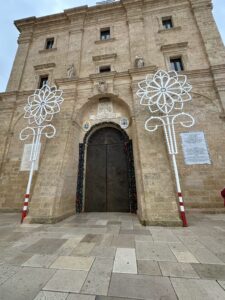
The fortified baroque sanctuary (built 1720–1755, raised to minor basilica by John Paul II in 1990) stands on the ancient temple site, with the revered Madonna de Finibus Terrae icon over the high altar and the old Altar to Minerva still visible inside. Climb the 284-step monumental staircase from the port, look for the Petrine Cross column marking St. Peter’s preaching, and take in the panorama over two seas.
What happened in Otranto — who are the martyrs?
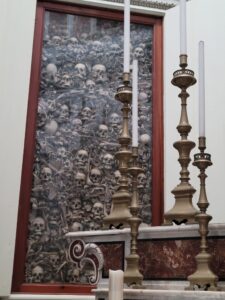
In August 1480, Ottoman forces captured Otranto and ordered every man over 15 who refused to convert to Islam to be killed. More than 800 townspeople, led by Antonio Primaldo, chose death over renouncing their faith. Their skulls and bones rest in a chapel of Otranto Cathedral — canonized by Pope Francis in 2013, they are among the most venerated martyrs in Italy, and their shrine is a profound stop on the walk.
What sacred sites will I pass along the way?
On the Via del Mare: Otranto’s cathedral with its extraordinary 12th-century mosaic floor and the martyrs’ chapel. On the Via dei Borghi: the Marian sanctuary of Montevergine (born of an apparition to a shepherd boy), the Augustinian church and convent at Melpignano, the rock crypts and menhirs around Giurdignano, and the village churches of the Grecìa Salentina. Near Galatina, don’t miss the Basilica di Santa Caterina d’Alessandria with its 14th-century frescoes and the historic Pozzo di San Paolo.
Is the Via dei Borghi currently open?
The Via dei Borghi is temporarily closed while the route is being re-mapped — check the official site (camminodelsalento.it) for the current status before planning around it. The Via del Mare is open and fully walkable, and the association runs guided group departures on it throughout the walking season.
Is the Cammino del Salento difficult?
No — it’s one of the most approachable pilgrim walks in Italy. The rating is easy to moderate: stages run 20–26 km (4–7 hours a day) over gentle terrain with modest climbs and no technical sections. If you can walk comfortably for a few hours and handle several days in a row, you can do this. Go in spring or autumn for the easiest conditions, skip high summer, and use the luggage transfer so you’re only carrying a daypack.
Do I need to be religious to walk the mini camino?
No — like the Camino de Santiago, the Cammino del Salento welcomes everyone. Many walk for the villages, the coastline, the food, or simply the rhythm of slow travel. But the sacred layer is always there if you want it. The stamps, the sanctuary at the end, and the Testimonium are given to every pilgrim who completes the walk, whatever their reason for setting out.
Practical tips
Luggage Providers move your bags between stages — walk with just a daypack. If going DIY, the association offers luggage transfer on request.
Sleep a mix of B&Bs, agriturismi, and small hotels; the association’s partner places give passport-holder discounts. Book ahead in spring and autumn.
Galatina rest stop if you want a slower, more comfortable version of the walk — a rest day among baroque churches, the pasticciotto capital’s pastry shops, and a proper dinner -Galatina is the perfect pause. (See Galatina guide linked above.)
Pack Broken-in walking shoes, layers, sun protection, and a swimsuit — you’ll pass swimmable water almost daily on the Via del Mare.